When your air conditioner stops working on a hot day, you need help fast. AC system repair services fix broken cooling systems and restore comfort to your home or business. Professional technicians can handle everything from minor fixes to major repairs on all types of air conditioning units.
Most AC problems can be repaired quickly when you call the right service. Trained experts arrive with the tools and parts needed to diagnose issues like refrigerant leaks, broken compressors, or faulty thermostats. They work on central air systems, ductless units, and other cooling equipment.
Understanding what repair services offer helps you make smart choices when your AC fails. In this guide, you’ll learn what problems require professional help, how the repair process works, and why regular maintenance prevents costly breakdowns.
Here’s what you need to know:
- AC system repair services: Restoring comfort and efficiency when your cooling fails
- Common AC problems that require repair services
- Residential AC repair services
- Commercial AC repair services
- Emergency AC repair services
- How professional AC system repair works
- Benefits of professional AC system repair services
- Preventing future AC repairs
Keep reading! Knowing when to call for repairs saves you money and keeps your space comfortable year-round.
AC system repair services: Restoring comfort and efficiency when your cooling fails
When your air conditioner stops working properly, professional repair services can quickly restore your home’s comfort. AC repair technicians handle everything from minor fixes to major system failures.
Common problems that require repair include:
- Poor cooling or weak airflow
- Strange noises like grinding or squealing
- Water leaks around the unit
- System that won’t turn on
- Unusual odors when running
Professional HVAC repair services send certified technicians to diagnose your cooling problems. These experts inspect each component of your system to find the exact issue. They check refrigerant levels, clean coils, test electrical connections, and examine all moving parts.
Most repair companies offer same-day or emergency service when you need it most. You don’t have to wait days in the heat for someone to fix your AC.
Benefits of professional AC repair:
| Service Feature | What You Get |
| Certified technicians | Trained experts who know your system |
| Complete diagnostics | Full inspection to find all problems |
| Quality parts | Proper replacements that last |
| Service guarantees | Protection for the work performed |
Regular maintenance can prevent many repair needs. HVAC professionals recommend getting your system checked twice a year. Spring tune-ups prepare your AC for summer cooling season.
When repairs become too costly or frequent, your technician can help you decide if replacement makes more sense. They will explain your options clearly so you can make the best choice for your home and budget.
Common AC problems that require repair services
AC systems can break down in several ways that need professional attention. Problems range from complete system failures to issues that reduce cooling efficiency or create unusual sounds and smells.
AC not turning on or failing to start
When your AC won’t turn on, the problem often starts with the electrical system. A tripped circuit breaker or blown fuse can cut power to your unit. These issues happen when the system draws too much electricity or experiences a power surge.
A faulty capacitor is another common cause. The capacitor stores energy and helps start the compressor and fan motors. When it fails, your AC won’t have enough power to start up.
Your thermostat might also be the issue. If it’s not sending signals to your AC system, the unit won’t know when to turn on. Dead batteries, incorrect settings, or a broken thermostat can all prevent your system from starting.
Electrical problems need professional repair. Working with AC electrical components without proper training creates safety hazards and can damage your system further.
Uneven cooling or hot spots in the home
Hot spots in certain rooms indicate your AC isn’t distributing cool air properly. Blocked or closed vents prevent air from reaching specific areas of your home. Check that all vents are open and clear of furniture or curtains.
Ductwork problems cause uneven cooling too. Leaks in your ducts let cool air escape before it reaches certain rooms. Poorly designed or damaged ducts can’t deliver air efficiently throughout your home.
A malfunctioning zone control system creates temperature differences between rooms. These systems use dampers to direct airflow to different areas. When dampers stick or fail, some rooms get too much air while others get too little.
Your AC might also be too small for your home’s size. An undersized unit can cool some areas but struggle to reach others. A technician can evaluate whether your system has enough capacity for your space.
Low airflow or weak cooling performance
Weak airflow from your vents means your AC is running but not pushing enough cool air through your home. A dirty air filter is the most common cause. Filters clogged with dust and debris block air from passing through your system. You should replace filters every 1-3 months.
According to ENERGY STAR (EPA/DOE), you should check your HVAC filter monthly and change it when dirty (at minimum, every three months) because a clogged filter restricts airflow and makes the system work harder, increasing energy waste and the risk of expensive maintenance.
Blocked or dirty evaporator coils reduce your system’s ability to cool air. These coils absorb heat from your indoor air. When dirt builds up on them, they can’t absorb heat effectively.
A failing blower motor struggles to push air through your ductwork. The motor might run slower than normal or stop working completely. You might hear unusual sounds when the blower motor starts to fail.
Refrigerant levels affect cooling performance even when airflow seems normal. Low refrigerant means your system can’t remove enough heat from the air. Your AC will run constantly but never reach the temperature you set on your thermostat.
Strange noises or unusual odors
Different sounds point to specific problems in your AC system. A grinding noise often means worn bearings in the motor. Squealing sounds indicate a loose or worn belt. Banging or clanking noises suggest loose parts inside the unit.
A hissing sound usually means refrigerant is leaking from your system. Clicking noises when your AC tries to start point to electrical problems. Bubbling sounds indicate a refrigerant leak or condensate drain issue.
Unusual smells require immediate attention. A burning smell means electrical components are overheating or wiring is damaged. This creates a fire risk and needs emergency repair.
Musty or moldy odors indicate moisture problems. Mold can grow in your ductwork or on your evaporator coils. A sewage-like smell might mean a backed-up drain line or dead animal in your ductwork.
Refrigerant leaks or frozen coils
Refrigerant leaks reduce your system’s cooling power and damage the environment. Signs include hissing sounds, ice buildup on refrigerant lines, and higher energy bills. Your AC needs a specific amount of refrigerant to work properly. When levels drop, the system can’t cool your home effectively.
Frozen evaporator coils happen when something disrupts the heat exchange process. Dirty air filters restrict airflow over the coils. Low refrigerant levels cause the coils to get too cold. Blocked return vents or closed registers reduce air circulation.
You’ll notice ice forming on the copper lines outside your home or on the indoor unit. Your AC might run constantly without cooling. Water may leak around your indoor unit as ice melts.
Never try to fix refrigerant leaks yourself. Handling refrigerant requires special certification and equipment. A technician will find the leak, repair it, and recharge your system with the correct amount of refrigerant. They’ll also check for underlying problems that caused the leak or freezing.
Per the U.S. EPA, technicians who maintain, service, or repair air-conditioning equipment that could release refrigerant must be certified under Clean Air Act Section 608, so refrigerant leaks and recharge work should be handled by an EPA-certified pro.
Residential AC repair services
Home cooling systems need professional attention when they break down or stop working efficiently. Trained technicians can fix central air units, heat pumps, ductless systems, and related components to restore comfort in your home.
Central air conditioner repair
Central air conditioning systems use a network of ducts to cool your entire home. When these systems fail, you might notice warm air blowing from vents, unusual noises, or higher energy bills.
Common problems include refrigerant leaks, frozen evaporator coils, and failed compressors. A technician will inspect your outdoor condenser unit and indoor air handler to find the issue. They check electrical connections, measure refrigerant levels, and test the blower motor.
Repairs often involve replacing worn parts like capacitors, contactors, or fan motors. Some fixes require specialized tools and EPA certification, especially when handling refrigerant. Licensed HVAC contractors have the training to work safely with these systems.
Regular maintenance helps prevent major breakdowns. However, even well-maintained systems eventually need repairs due to normal wear and age.
Heat pump troubleshooting and repair
Heat pumps provide both heating and cooling for your home. They move heat rather than generate it, which makes them energy efficient but also means they have more complex components than standard air conditioners.
Problems with heat pumps include reversing valve failures, defrost cycle issues, and auxiliary heat malfunctions. You might notice your system struggling to maintain temperature or switching modes incorrectly.
Technicians test the reversing valve, check refrigerant pressure, and inspect the outdoor unit for ice buildup. They also examine sensors and controls that manage the heating and cooling cycles. Heat pump repairs require understanding of both heating and cooling principles.
Some repairs are seasonal. For example, ice accumulation problems typically happen in winter, while cooling issues appear in summer.
Ductless mini-split repair
Ductless mini-split systems have an outdoor compressor and one or more indoor air handlers mounted on walls. These systems cool specific rooms without requiring ductwork.
Common issues include drainage problems, remote control malfunctions, and communication errors between indoor and outdoor units. You might see water leaking from the indoor unit or find that the system won’t respond to commands.
Repair technicians clean blocked drain lines, replace faulty circuit boards, and fix refrigerant line connections. They also inspect the mounting brackets and ensure proper airflow around both units. Mini-splits use different technology than central systems, so specialized knowledge helps with accurate diagnosis.
These systems are known for reliability, but they still need professional service when problems occur.
Thermostat and control system fixes
Your thermostat controls when your AC system turns on and off. Problems with thermostats or control systems can make your home uncomfortable even when the AC unit itself works fine.
Issues include incorrect temperature readings, dead batteries, loose wiring, and failed sensors. Sometimes the thermostat is installed in a bad location where sunlight or drafts affect its readings.
A technician will test the thermostat calibration, check wire connections, and verify it communicates properly with your AC system. They might relocate a poorly positioned thermostat or upgrade you to a programmable model. Modern smart thermostats require WiFi setup and app configuration.
Control board problems in the AC unit can also cause system failures. These repairs need electrical expertise to diagnose and fix safely.
Air filter and ductwork inspections
Air filters trap dust, pollen, and debris before they enter your AC system. Clogged filters restrict airflow and force your system to work harder. This increases energy costs and can damage components.
Technicians inspect filters during service calls and recommend replacement schedules based on your home environment. Most filters need changing every 1-3 months, but this varies by filter type and household factors like pets or allergies.
Ductwork problems include leaks, disconnected sections, and blocked vents. Poor ductwork reduces efficiency and creates uneven cooling in different rooms. Repair professionals seal leaks with mastic or metal tape and reconnect loose ducts. They also check that supply and return vents have proper airflow.
Insulation around ducts prevents energy loss, especially for ducts running through attics or crawl spaces. Damaged insulation should be replaced during ductwork repairs.
Commercial AC repair services
Businesses need reliable cooling systems to maintain comfortable environments for employees and customers. Commercial AC repair addresses the unique challenges of large-scale systems that differ significantly from residential units in size, complexity, and operational demands.
Rooftop unit repairs
Rooftop units serve as the workhorses of commercial cooling, handling the climate control needs of entire buildings from their elevated positions. These systems face constant exposure to weather elements, debris, and temperature extremes that accelerate wear on components.
Common repair issues include compressor failures, refrigerant leaks, and electrical control malfunctions. The location of these units makes regular access challenging, which often means problems go unnoticed until system performance drops significantly.
Technicians must work at heights and navigate roof access safely while carrying diagnostic equipment and replacement parts. Belt replacements, fan motor repairs, and condenser coil cleaning represent routine maintenance tasks that prevent larger failures. When dampers stick or economizers fail, your building loses energy efficiency and struggles to maintain consistent temperatures across different zones.
Chiller and large system diagnostics
Chillers cool large commercial spaces through complex refrigeration cycles that require specialized knowledge to diagnose and repair. These systems move hundreds of tons of cooling capacity and rely on precise mechanical and electrical coordination.
Diagnostic work begins with monitoring refrigerant pressures, temperatures, and flow rates throughout the system. Technicians analyze compressor performance data, check oil levels and quality, and evaluate heat exchanger efficiency. Water-cooled chillers need additional attention to water treatment, scale buildup, and cooling tower integration.
Advanced diagnostic tools identify issues before complete system failures occur. Vibration analysis detects bearing wear, thermal imaging reveals hot spots in electrical connections, and refrigerant analysis shows contamination problems. Your facility’s cooling load calculations must match the chiller’s capacity, or you’ll face short cycling, poor dehumidification, and premature equipment failure.
Emergency response for business continuity
AC system failures during business hours create immediate problems that affect revenue, employee productivity, and customer satisfaction. Emergency repair services provide rapid response when your cooling system stops working unexpectedly.
Response times matter critically in commercial settings where every hour of downtime costs money. Qualified technicians arrive with diagnostic equipment and common replacement parts to resolve problems quickly. They assess whether immediate repairs can restore function or if temporary cooling solutions become necessary while sourcing specialized components.
Priority response services typically include:
- 24/7 availability for urgent repair needs
- Rapid diagnostic procedures to identify failure points
- Mobile inventory of common commercial AC parts
- Temporary cooling equipment deployment options
- Communication protocols to keep facility managers updated
Load testing and system calibration
Commercial AC systems must deliver precise cooling capacity matched to building requirements throughout changing conditions. Load testing verifies that your system produces its rated output and distributes cooling effectively across all zones.
Technicians measure actual cooling output against design specifications using specialized instruments. They check airflow volumes at each diffuser, verify temperature drops across coils, and confirm refrigerant charge levels match manufacturer requirements. Calibration adjusts controls, dampers, and variable speed drives to optimize performance.
Key calibration checkpoints:
| Component | Measurement | Target Range |
| Supply air temperature | Thermometer readings | 55-60°F typical |
| Airflow volume | CFM measurements | Per design specs |
| Refrigerant subcooling | Pressure/temp analysis | 10-15°F typical |
| Static pressure | Manometer readings | System-specific |
Seasonal load testing ensures your equipment handles peak demand periods without strain. Imbalanced systems waste energy and create hot spots in your facility.
According to the U.S. Department of Energy, organizations can typically save about 5% to 20% per year on energy bills by following HVAC operations and maintenance best practices, which is why timely commercial repairs and preventive service planning directly support lower operating costs.
Compliance with commercial HVAC codes
Commercial AC repair work must meet building codes, safety standards, and environmental regulations that govern refrigerant handling and system modifications. Your jurisdiction requires specific permits for certain types of repair work and system alterations.
Refrigerant recovery and recycling follow EPA regulations that mandate certified technicians and proper documentation. Ventilation rates must meet ASHRAE standards for indoor air quality based on your building’s occupancy and use. Electrical work requires adherence to NEC codes, and fire safety codes dictate clearances around equipment.
Licensed contractors maintain insurance coverage and follow manufacturer guidelines to preserve equipment warranties. They document repairs with detailed service records that prove compliance during inspections. Energy codes in many areas require efficiency testing after major repairs to verify systems meet minimum performance standards.
Emergency AC repair services
When your air conditioner stops working during a heat wave, you need fast solutions to restore cooling. Available 24/7, emergency repair services address urgent breakdowns that affect your comfort and safety.
When to call for urgent repairs
You should contact emergency AC repair services if your system fails to start or stops cooling completely. These situations require immediate attention, especially during extreme temperatures.
Call for help right away if you notice your AC starting and stopping repeatedly within short periods. This cycling problem can damage your compressor and increase your energy bills quickly.
Strange noises like grinding, squealing, or banging indicate serious mechanical problems. These sounds often mean parts are failing or loose components are causing damage inside your unit.
Watch for unusual smells coming from your vents. Burning odors suggest electrical issues, while musty smells point to mold growth in your system.
You need emergency service if you see water leaks, sparks, flames, or smoke from your AC unit. These signs indicate dangerous conditions that require shutting off your system and calling professionals immediately.
Risks of delaying AC repairs
Putting off repairs leads to higher costs as small problems grow into major failures. A refrigerant leak that costs $300 to fix today might require a $2,000 compressor replacement next month.
Your energy bills increase when broken AC components force your system to work harder. A failing capacitor or clogged filter can raise cooling costs by 15-30% each month.
Indoor air quality drops when your damaged AC can’t filter out dust, pollen, and allergens properly. This affects anyone in your home with asthma or allergies.
Complete system failure becomes more likely when you ignore warning signs. You might face days without cooling while waiting for parts or a full replacement.
Temporary fixes versus permanent solutions
You can change your air filter and clear debris from your outdoor unit while waiting for repairs. These quick tasks sometimes restore partial cooling but rarely fix major problems.
Turning your thermostat up a few degrees reduces strain on a struggling system. This helps prevent additional damage but doesn’t address the underlying issue.
Portable fans and window units provide temporary relief during repairs. However, these alternatives don’t cool your entire home efficiently.
Only licensed technicians should handle refrigerant, electrical components, or mechanical parts. Attempting DIY repairs on these systems risks injury and violates EPA regulations.
Professional repairs include proper diagnostics, quality parts, and warranties on labor. Emergency technicians fix the root cause rather than masking symptoms with quick patches.
Same-day repair options
Many HVAC companies offer 24/7 emergency service with technicians available nights, weekends, and holidays. Response times vary based on your location and contractor availability.
Emergency service typically costs 1.5 to 2 times more than regular appointments. You pay premium rates for immediate response, but you restore cooling when you need it most.
Common repairs that technicians complete in one visit include:
- Replacing capacitors or contactors
- Fixing refrigerant leaks and recharging the system
- Cleaning clogged condensate drains
- Repairing faulty thermostats
- Replacing broken fan motors
Complex problems requiring special parts might need follow-up visits. Your technician will provide temporary solutions until they complete permanent repairs.
Safety considerations during extreme heat
Indoor temperatures above 85°F create health risks for young children, elderly people, and those with chronic conditions. You should relocate vulnerable family members to cooler locations during AC failures.
Heat exhaustion symptoms include heavy sweating, weakness, dizziness, and nausea. Move to a cool area, drink water, and seek medical help if symptoms worsen.
Your home becomes unsafe when indoor temperatures exceed 90°F for extended periods. Consider staying with family, friends, or cooling centers while waiting for emergency repairs.
Keep your body temperature down by drinking plenty of water, avoiding physical activity, and wearing light clothing. Close blinds during the day to block sunlight and reduce heat gain.
Never run generators, grills, or camping stoves indoors for cooling or cooking during power outages. These devices produce carbon monoxide that can be deadly in enclosed spaces.
How professional AC system repair works
Professional AC repair follows a structured process that moves from identifying the problem to fixing it and making sure everything works correctly. Technicians use specific steps to diagnose issues, repair damaged parts, and test the system before they finish the job.
Initial diagnostic testing
When a technician arrives, they start by checking your thermostat settings and examining the entire system. They turn on the AC unit and listen for unusual sounds like grinding, squealing, or banging. The technician measures the airflow from your vents and checks the temperature difference between the air going in and coming out.
They use specialized tools to test electrical connections and measure voltage levels. A multimeter helps them find faulty wiring or electrical problems that could stop your system from working. They also inspect the condensate drain line to make sure water flows properly and doesn’t back up into your home.
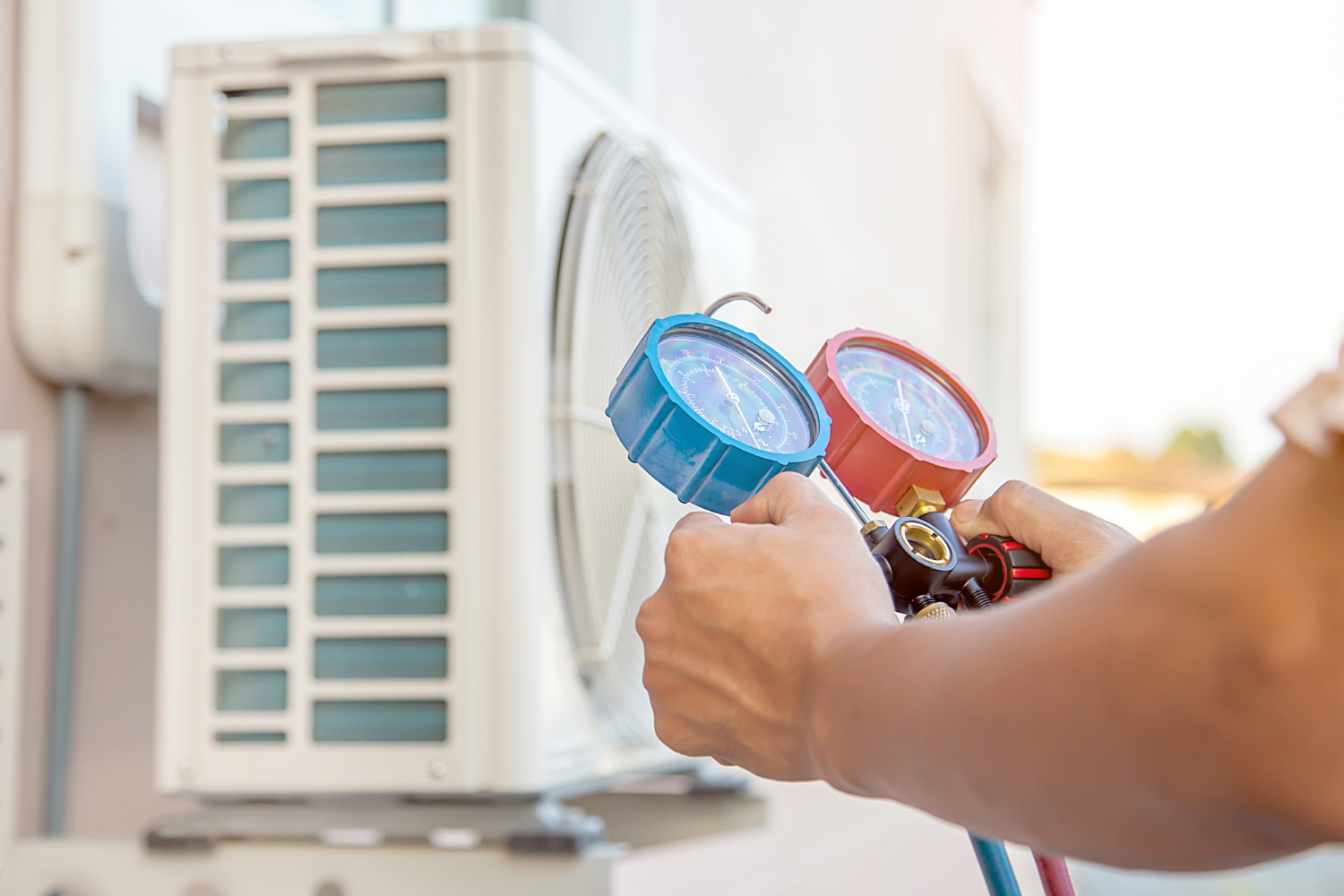
The technician checks refrigerant pressure levels with gauges attached to the service ports. Low pressure might mean a leak, while high pressure could point to a blocked system or overcharged refrigerant. They examine visible components like the compressor, fan motor, and capacitors for signs of damage or wear.
Identifying underlying causes
After testing, the technician analyzes all the data they collected to find the root cause of the problem. They don’t just fix what seems broken on the surface. Instead, they look for why the part failed in the first place.
For example, if your compressor stopped working, they check if dirty coils caused it to overheat. If the evaporator coil froze, they determine whether low refrigerant, restricted airflow, or a broken blower motor created the issue. Sometimes multiple problems work together to damage your system.
The technician inspects your air filter and ductwork because blocked airflow causes many AC problems. They look at the outdoor unit to see if debris, plants, or dirt restrict the condenser coils. They also check if your system is the right size for your home, since an incorrectly sized unit creates ongoing problems.
Component replacement and system repair
Once the technician knows what needs fixing, they explain the problem and the required repairs. They give you a clear estimate before starting any work. Most technicians carry common parts on their truck, so they can complete repairs during the same visit.
Common repairs include:
- Replacing worn capacitors that help motors start and run
- Fixing refrigerant leaks and adding the correct amount of refrigerant
- Installing new contactors or relays for electrical control
- Changing damaged fan motors or blower assemblies
- Cleaning or replacing evaporator and condenser coils
- Repairing or replacing the compressor
The technician uses proper tools and follows manufacturer guidelines for each repair. They handle refrigerant according to EPA regulations and dispose of old parts safely. If they need to order a special part, they explain the timeline and may provide temporary solutions to keep your home cool.
Testing and verification of system performance
After making repairs, the technician runs the system through a complete cycle. They measure the temperature drop across the coils to confirm proper cooling. Normal systems should cool air by 15 to 20 degrees from the return air temperature.
They verify that refrigerant pressures fall within the manufacturer’s specifications. The technician checks all electrical connections again and confirms that safety controls work correctly. They make sure the condensate drain removes water properly and inspect for any new leaks.
The technician monitors how long the system runs and whether it cycles on and off at appropriate intervals. Short cycling means the system turns on and off too quickly, which wastes energy and strains components. They also check airflow at different vents throughout your home to ensure balanced cooling.
Recommendations to prevent future issues
Before leaving, the technician shares specific maintenance steps based on what they found during the repair. They tell you how often to change your air filter and may recommend a better filter type for your situation. If they found dirty coils, they explain how regular cleaning prevents future breakdowns.
They might suggest trimming plants around your outdoor unit or cleaning the area to improve airflow. The technician identifies any parts that look worn and estimates when you might need to replace them. This helps you plan for future costs instead of facing surprise breakdowns.
Many technicians recommend scheduling maintenance visits twice a year to catch small problems early. They can also suggest upgrades like a programmable thermostat or improved insulation that make your system work more efficiently. You receive documentation of all repairs and recommendations for your records.
Benefits of professional AC system repair services
Professional AC repair services deliver faster comfort restoration, lower energy bills, and longer equipment life. These services also protect your safety and prevent future system failures.
Restores indoor comfort quickly
Professional technicians diagnose AC problems fast because they work with these systems every day. They carry the right tools and replacement parts in their service vehicles, which means most repairs get completed in one visit.
When your AC breaks down during summer, waiting even a few hours can make your home uncomfortable. Trained repair specialists know how to identify issues like refrigerant leaks, failed compressors, or electrical problems within minutes. They follow systematic troubleshooting methods that pinpoint the exact cause instead of guessing.
DIY repairs often take much longer because you need to research the problem, order parts, and learn new skills. Professional services eliminate this delay and restore cool air to your home on the same day in most cases.
Reduces energy costs by improving efficiency
A malfunctioning AC system uses more electricity to cool your home. Dirty coils, low refrigerant levels, and worn components force the unit to run longer cycles and work harder than necessary.
Professional repairs address these efficiency problems directly. Technicians clean condenser coils, refill refrigerant to manufacturer specifications, and replace faulty parts that waste energy. They also check airflow rates and calibrate thermostats to ensure your system runs at peak performance.
Most homeowners see lower electric bills within the first month after professional repairs. A well-maintained system can use 15-20% less energy than one with unresolved issues. This reduction in energy consumption pays back the repair cost over time through monthly savings.
Extends system lifespan
Air conditioning systems typically last 15-20 years with proper care and timely repairs. Ignoring small problems or attempting amateur fixes can cut this lifespan in half.
Professional repair services prevent minor issues from damaging other components. For example, a worn fan belt can cause motor strain if left unaddressed. Technicians spot these developing problems and fix them before they cascade into bigger failures.
Regular professional repairs also maintain the manufacturer’s warranty on many systems. Most warranties require licensed technician service to remain valid. Certified professionals document all repairs and use approved parts that meet industry standards.
Ensures safety and compliance
AC systems contain high-voltage electrical components and pressurized refrigerants that pose serious risks. Professional technicians receive safety training and follow strict protocols to handle these hazards properly.
Electrical problems in AC units can cause fires or shocks if handled incorrectly. Licensed repair specialists perform thorough wiring inspections and use proper testing equipment to identify dangerous conditions. They understand local electrical codes and ensure all repairs meet safety requirements.
Refrigerant handling requires EPA certification because these chemicals harm the environment when released improperly. Professional services have the certification and equipment to recover, recycle, and recharge refrigerants according to federal regulations. This protects both your family and the environment.
Minimizes risk of repeated breakdowns
Professional repairs fix the root cause of AC problems instead of just treating symptoms. This approach prevents the same issue from happening again shortly after a repair.
Experienced technicians examine the entire system during repair visits. They identify worn parts that might fail soon and recommend replacements before breakdowns occur. This preventive approach saves you from emergency repair calls during the hottest days of summer.
Many professional AC services also offer maintenance plans that include regular inspections. These scheduled visits catch small problems early and keep your system running reliably. The combination of quality repairs and ongoing maintenance significantly reduces unexpected failures.
Preventing future AC repairs
Regular maintenance and proactive monitoring can significantly reduce the likelihood of unexpected breakdowns and expensive repairs. Taking specific preventive measures helps your AC system run efficiently while extending its operational lifespan.
Scheduling regular maintenance and inspections
Professional maintenance should occur at least once per year, ideally before the cooling season begins. During these visits, technicians check refrigerant levels, test electrical connections, and inspect all major components for signs of wear.
Annual inspections allow experts to identify small problems before they become major failures. Your technician will lubricate moving parts, tighten loose connections, and verify that your system operates at peak efficiency.
Spring is the optimal time for AC maintenance since it prepares your system for summer demands. If you use your AC year-round, consider scheduling inspections twice annually to maintain consistent performance.
Replacing filters and cleaning ducts
Air filters require replacement every 1-3 months depending on usage, pets, and allergies in your household. Clogged filters restrict airflow and force your system to work harder, which increases energy costs and component stress.
Filter replacement schedule:
- Standard filters: Every 90 days
- Homes with pets: Every 60 days
- Allergy sufferers: Every 30-45 days
- Vacation homes: Every 6-12 months
Duct cleaning removes accumulated dust, debris, and potential allergens from your air distribution system. Professional duct cleaning every 3-5 years improves air quality and prevents blockages that reduce system efficiency. Clean ducts also prevent your AC from circulating contaminants throughout your home.
Monitoring system performance
Pay attention to unusual sounds like grinding, squealing, or banging coming from your AC unit. These noises often indicate loose parts, motor problems, or failing components that need immediate attention.
Watch for changes in cooling performance, such as weak airflow, warm air from vents, or uneven temperatures between rooms. Track your energy bills for unexpected increases, which may signal declining efficiency.
Check the area around your outdoor unit regularly for debris, vegetation, or obstructions that restrict airflow. Your indoor unit should never leak water or produce musty odors, as these signs point to drainage issues or mold growth.
Upgrading outdated components
AC systems older than 10-15 years often lack the efficiency of modern units and require more frequent repairs. Replacing an aging system prevents the cycle of repeated fixes that cost more than a new installation.
Upgrading to a programmable or smart thermostat improves temperature control and reduces unnecessary system operation. These devices learn your preferences and adjust cooling schedules automatically, which decreases wear on components.
Consider replacing single-stage compressors with variable-speed models that adjust output based on cooling demands. Variable-speed technology reduces the on-off cycling that causes premature component failure and maintains more consistent indoor temperatures.
Early detection of potential issues
Conducting monthly visual inspections helps you spot problems early. Look for ice buildup on refrigerant lines, rust on metal components, or corrosion around electrical connections.
Listen to your system during operation to establish what normal sounds like for your unit. Any deviation from typical operation patterns deserves professional evaluation before minor issues escalate.
Test your system periodically during off-seasons to ensure it starts properly and cools effectively. This practice reveals hidden problems when repair shops are less busy and parts are readily available. Keep records of all maintenance, repairs, and observations to track patterns and share detailed information with your technician.
Conclusion
Regular AC system repair services keep your home comfortable and your energy bills manageable. When you work with trained technicians, they can spot small problems before they turn into expensive repairs. This saves you money and extends the life of your cooling system.
Professional repairs improve your AC’s energy efficiency. A well-maintained system uses less power to cool your home. This means lower monthly utility costs and better performance during hot weather.
You also benefit from improved indoor air quality when your AC receives proper maintenance and repairs. Clean filters and well-functioning components reduce dust, allergens, and pollutants in your home’s air.
Timely repairs prevent system breakdowns during peak cooling season. Nobody wants their AC to fail during the hottest days of summer. Regular service visits help ensure your system runs reliably when you need it most.
Working with qualified HVAC technicians gives you peace of mind. They have the right tools, training, and experience to diagnose issues correctly. They can handle both simple fixes and complex electrical problems safely.
Your AC system is a significant investment in your home’s comfort. Taking care of it through professional repair services protects that investment. Schedule regular maintenance visits and address problems quickly when they appear. This approach keeps your system running efficiently for years to come.
Schedule AC system repair services with Kinty Jones to diagnose the issue, restore safe cooling performance, and prevent repeat breakdowns.