Knowing how to improve airflow in Tulsa homes starts with understanding what your HVAC system is up against. Tulsa sits in a humid subtropical climate where July highs average 93 degrees, summer humidity regularly climbs above 70 percent, and the cooling season stretches from May well into October.
Your air conditioner is not just fighting heat. It is fighting heat, moisture, and the physics of moving air through a network of ducts, vents, and rooms that may not have been designed for the load your home carries today.
Poor airflow is one of those problems that shows up everywhere but hides in plain sight. It is the bedroom that never cools down, the utility bill that creeps higher every summer, the system that runs constantly without the house ever feeling right. The air conditioner might be working perfectly at the unit, but if that conditioned air is not reaching every room in the right volume, the comfort and efficiency you are paying for never actually arrives.
The fixes range from things you can do in ten minutes to improvements that require a professional. This article covers both, starting with the most common airflow restrictions in Tulsa homes and working through to the upgrades that deliver lasting results.
In this article, you will learn about:
- What actually restricts airflow in a typical Tulsa home
- Simple changes that make an immediate difference
- Ductwork problems that silently steal your comfort
- How your HVAC equipment affects the air it delivers
- Upgrades that solve airflow problems for good
Keep reading to find out where your home is losing air, why certain rooms never feel right, and what it takes to get consistent comfort from the front door to the back wall.
What actually restricts airflow in a typical Tulsa home
Airflow in a residential HVAC system follows a simple loop. The blower pulls air through the return grilles, pushes it across the evaporator coil for cooling, and sends it through the supply ducts to every room. The air then circulates back to the returns, and the cycle repeats. Anything that disrupts that loop reduces the volume of air reaching your rooms and forces the system to work harder for less result.
Tulsa homes face a few specific challenges. Many were built during decades when duct design standards were less rigorous, and the ductwork often runs through unconditioned attics where extreme heat degrades materials over time. Oklahoma’s red clay soil and seasonal dust load also mean filters clog faster than in less arid climates.
The restrictions fall into three broad categories:
- Supply-side problems that reduce the volume of cool air reaching individual rooms
- Return-side problems that starve the blower of the air it needs to circulate
- System-level problems where the equipment itself cannot produce or move enough air
Understanding which category your home falls into determines whether the fix is a ten-minute adjustment or a professional service call.
The air filter is always the first place to look
A clogged filter is the most common and most easily fixed airflow restriction in any HVAC system. Every cubic foot of air your system moves passes through the filter first. When dust, pollen, pet hair, and debris accumulate on the filter media, they create resistance that the blower has to push against. The result is less air reaching the coils, less air reaching the rooms, and a system that runs longer without delivering the cooling you need.
During Tulsa’s cooling season, follow this schedule:
- Standard one-inch fiberglass or pleated filters: replace every 30 days
- Two-inch pleated filters: check monthly, replace every 60 days
- Four-inch to five-inch media filters: check quarterly, replace every six to twelve months
If you have pets, live near construction, or run the system around the clock during peak summer, lean toward the shorter interval in each range. A clean filter is the cheapest improvement you can make to your system’s airflow and efficiency.
Closed vents and blocked returns
It seems logical to close vents in rooms you do not use, but residential HVAC systems are designed to distribute a specific volume of air across all supply vents simultaneously. Closing one or two vents increases the static pressure inside the duct system, which reduces airflow to every other room and can push air out through duct leaks that would not have mattered at normal pressure.
Blocked return grilles cause the same problem from the opposite direction. Common obstructions include:
- A couch or recliner pushed flat against a wall-mounted return
- A rug or piece of furniture placed over a floor return
- Heavy curtains hanging over a high-wall return grille
- Storage boxes stacked in front of a return in a utility room
Walk through your home and confirm that every supply vent and return grille is open and has at least a few inches of clearance on all sides.
Closed interior doors without return air paths
In a home with a central return in the hallway, closing a bedroom door at night cuts that room off from the return air path. The supply vent keeps pushing air in, but the air has no way to get back to the handler. The room pressurizes, supply air slows, and the temperature rises. Meanwhile, the rooms near the open return get more than their share of airflow, creating the hot and cold spots Tulsa homeowners know well.
Solutions range from simple to structural:
- Leave doors slightly ajar at night to allow some return airflow.
- Undercut doors by half an inch to three-quarters of an inch to let air pass beneath.
- Install transfer grilles or jump ducts that connect closed rooms to the return path through the ceiling or wall cavity.
The third option is the most effective because it maintains return airflow even with the door fully closed, without compromising privacy or sound isolation the way an open door does.
Simple changes that make an immediate difference
Before calling for service, several no-cost or low-cost adjustments can improve airflow noticeably. These are not permanent fixes for structural problems, but they help the system work closer to its potential while you evaluate whether deeper work is needed.
Clear and clean every register
Dust buildup inside supply registers restricts the opening and redirects airflow away from the room. A quick cleaning makes a noticeable difference:
- Turn off the system.
- Remove each register cover and soak it in warm, soapy water.
- Vacuum the inside of the duct boot behind the register.
- Wipe down the louvers, reinstall, and make sure they are angled to direct air into the room rather than straight up at the ceiling.
While the covers are off, look into the duct boot. If you see heavy dust accumulation, sagging flex duct, or a disconnected joint, you have found a problem that a professional duct cleaning or repair can address.
Use ceiling fans to assist air distribution
Ceiling fans do not lower the temperature of a room. They move air across skin, which accelerates evaporation and makes the same temperature feel several degrees cooler. In rooms where airflow from the HVAC system is marginal, a ceiling fan bridges the gap without adding load to the system.
A few guidelines for getting the most from ceiling fans:
- Set them to spin counterclockwise in summer to push air downward
- Reverse the direction in winter to pull cool air up and circulate warm air along the ceiling and down the walls
- Run fans only in occupied rooms, since they cool people, not spaces
- Choose fan sizes appropriate to the room, as an undersized fan moves too little air to matter
Keep the outdoor unit clear
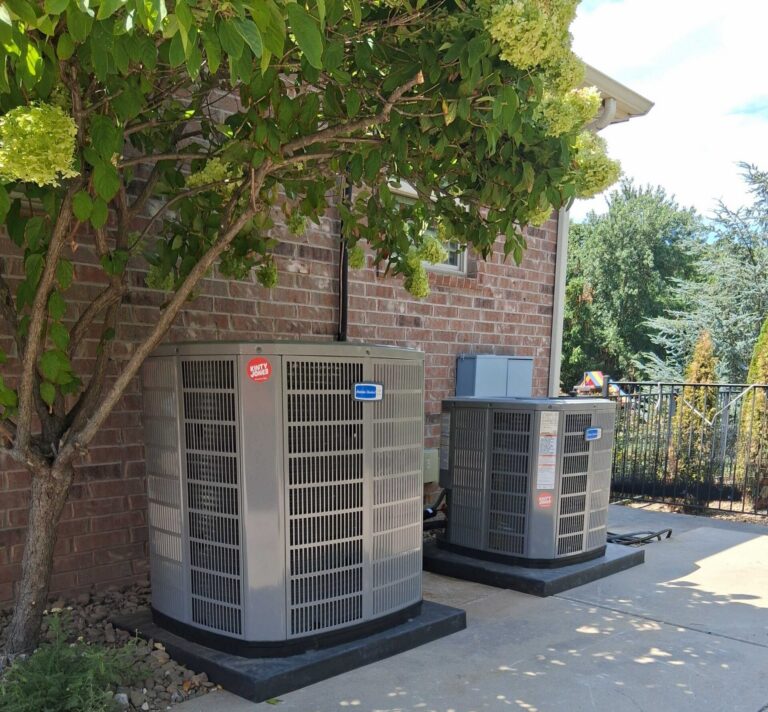
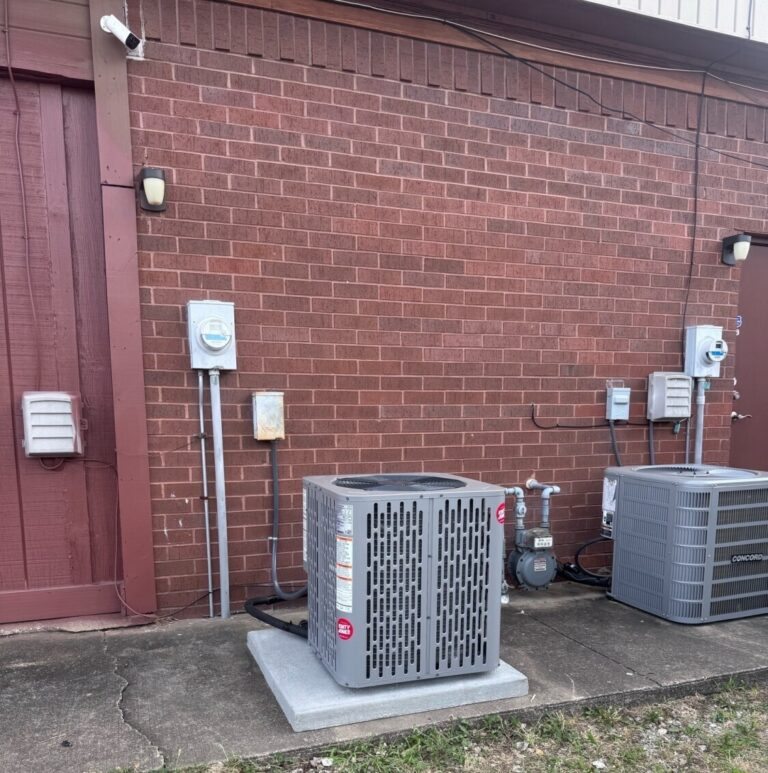
The condenser unit outside your Tulsa home needs unobstructed airflow to reject the heat your AC pulled from inside. When grass, weeds, fence panels, or stored items crowd the unit, the condenser coil cannot release heat efficiently. That lost capacity ripples through the entire system and weakens supply airflow at the vents.
Maintain at least two feet of clearance on all sides. Rinse the coil fins with a garden hose periodically, spraying from the inside out, to clear embedded dirt. Trim back any vegetation that grows into the clearance zone throughout the season.
Ductwork problems that silently steal your comfort
If the basics are covered and airflow is still poor, the ductwork itself is the next place to investigate. Duct problems are the most common structural cause of airflow loss in Tulsa homes, and they are invisible to homeowners because the ducts run through attics, crawlspaces, and wall cavities.
Leaks, gaps, and disconnected joints
According to ENERGY STAR, a typical home loses 20 to 30 percent of its conditioned air through leaks, holes, and poorly connected ducts. In a Tulsa attic where summer temperatures exceed 130 degrees, every leak sends expensive cooled air into a space you are not trying to condition.
Duct leaks create a chain of problems:
- Rooms served by the leakiest runs get the least air and stay warmest
- The system runs longer to compensate, driving up electricity costs
- Hot attic air gets pulled into the return side, raising the temperature of the air before it reaches a vent
- Humidity from the attic enters the conditioned space, making the house feel muggy even when the thermostat reads the right number
If your system seems to run nonstop without the house ever feeling cool enough, duct leaks are one of the most likely causes.
Crushed, kinked, or sagging flex duct
Flex duct is the most common material in residential installations, and it is vulnerable to damage. A single sharp bend, a section that collapsed under stored items, or a run that sags between supports can cut airflow to a room by half or more.
Signs of a flex duct restriction include:
- One or two rooms that consistently lag behind the rest of the house
- Weak airflow from a specific vent even when the system runs at full capacity
- A whistling or hissing sound from a vent, indicating air forcing through a tight spot
- A section of duct in the attic that feels warm to the touch while the system runs, which can mean the insulation wrap has separated from the inner liner
A visual inspection of accessible ductwork can reveal obvious problems. For hidden leaks and restrictions, a professional duct test with a duct blaster measures the actual leakage and airflow delivery to each room.
Undersized ducts for the rooms they serve
A duct that was sized for a small bedroom cannot deliver enough air to a converted master suite. A trunk line designed for the original floor plan cannot feed an addition tapped into it ten years later. When duct sizing does not match the cooling load of the rooms it serves, no amount of sealing or straightening fixes the airflow deficit.
A qualified HVAC contractor can measure the CFM delivered to each room and compare it to the room’s calculated load. Where the ducts are undersized, the options typically follow this priority:
- Replace the restricting run with the correct diameter duct.
- Add a supplemental duct run from the trunk line to the underserved room.
- Install a ductless mini-split to handle the room’s load independently, bypassing the duct system entirely.
How your HVAC equipment affects the air it delivers
Even with perfect ductwork, the equipment itself determines how much air moves through the system and how effectively it reaches every room. Equipment problems that reduce airflow are often invisible from the outside but measurable in comfort and utility bills.
A dirty evaporator coil
The evaporator coil sits inside the air handler, directly in the path of every cubic foot of air the system moves. When dust and debris coat the coil, they fill the gaps between the fins and restrict the volume of air that can pass through. This is the indoor equivalent of a clogged filter, but it develops more slowly and cannot be fixed by swapping a filter at the hardware store.
A professional coil cleaning during a seasonal AC tune-up restores the airflow path and recovers cooling capacity you may not have realized you lost. In a Tulsa home where the system runs six months of the year, annual coil cleaning is not optional maintenance. It is essential to maintaining the airflow the system was designed to deliver.
A blower motor losing speed
The blower motor is the engine of your airflow. When it weakens from worn bearings, a failing run capacitor, or electrical degradation, the volume of air it moves drops. The decline is usually gradual, so homeowners adapt by turning the thermostat lower instead of recognizing that the system is delivering less air per cycle.
Warning signs of a weakening blower motor include:
- Airflow from all vents feels softer than it used to, not just one or two rooms
- The system runs longer cycles without fully satisfying the thermostat
- A humming or buzzing sound from the air handler at startup
- The blower takes a few seconds to reach full speed after the system kicks on
According to the U.S. Department of Energy, switching to high-efficiency cooling equipment and taking targeted actions to keep a home cool can reduce energy use for air conditioning by up to 50 percent. A significant portion of that potential comes from ensuring the blower and airflow system are functioning at their designed capacity.
Single-speed versus variable-speed systems
A single-speed blower runs at one speed: full blast. It cycles on, delivers maximum air, cycles off, and repeats. A variable-speed blower adjusts its speed to match the current demand, running at lower speeds for longer periods.
The difference matters for airflow consistency:
- Single-speed systems create temperature swings between cycles because airflow stops entirely when the system shuts off
- Variable-speed systems run more continuously at lower output, keeping air moving and temperatures steady
- Longer, gentler cycles improve dehumidification, which is critical in Tulsa’s humid summers
- Lower fan speeds reduce noise, duct pressure, and energy consumption
For Tulsa homes where airflow inconsistency is a chronic problem, upgrading to variable-speed equipment often resolves the issue more completely than any duct modification alone.
Upgrades that solve airflow problems for good
When the basics are covered and the equipment is healthy, persistent airflow problems usually trace back to the duct system or the building envelope itself. These upgrades address the structural factors that no filter change or vent adjustment can fix.
Professional duct sealing and balancing
A professional duct sealing service locates and seals every leak in the system using mastic or metal-backed tape, then retests to verify the improvement. A balancing service goes further, adjusting the dampers in the trunk line and branch ducts so each room receives airflow proportional to its cooling load.
The process typically follows these steps:
- A duct blaster test measures total system leakage and identifies the worst sections.
- The technician seals accessible leaks with mastic sealant or foil-backed tape.
- For systems with significant leakage in inaccessible areas, aerosol-based duct sealant can be injected to seal leaks from the inside.
- Once sealed, the technician tests airflow at each supply register and adjusts dampers to balance delivery.
- A post-seal duct blaster test confirms the improvement and documents the results.
Together, sealing and balancing transform a duct system that delivers unevenly into one that matches each room’s actual need.
Air sealing and insulation improvements
According to ENERGY STAR, homeowners can save an average of 15 percent on heating and cooling costs by air sealing their homes and adding insulation in attics, floors over crawlspaces, and basements. Those savings come from reducing the total heat load your system has to handle, which means the airflow it produces goes further.
In Tulsa, where the DOE recommends attic insulation levels of R-38 to R-60 for climate zone 3, many older homes fall well short. Key improvements include:
- Adding blown-in cellulose or fiberglass to bring attic insulation up to current recommendations
- Sealing gaps around plumbing stacks, electrical wires, recessed lights, and the tops of interior walls where they meet the attic floor
- Insulating exposed ductwork in unconditioned spaces with the correct R-value wrap
- Weatherstripping and caulking around windows, doors, and other envelope penetrations
These improvements reduce heat gain in summer and heat loss in winter, which means your system can maintain comfort with less effort and the airflow it delivers goes further in every room.
Zoning for homes that cannot be balanced
Some airflow problems are built into the architecture. A two-story home will always have warmer upstairs rooms because heat rises. A room with a wall of west-facing windows will always absorb more afternoon sun than an interior hallway. A long ranch-style floor plan puts some rooms 50 or 60 feet from the air handler, at the end of duct runs that lose pressure with every foot of distance.
For homes where the layout itself creates airflow imbalances that duct sealing and balancing cannot fully resolve, a zoning system offers the most precise control. Zoning divides the duct system into independent zones with separate thermostats and motorized dampers. The system directs more conditioned air to zones that need it and less to zones that are already comfortable.
Zoning works best when paired with variable-speed equipment, because the blower adjusts its output as dampers open and close. A single-speed system paired with zoning can create excessive static pressure when most zones are satisfied and only one or two remain open. A qualified HVAC contractor can evaluate whether your system is a good candidate for zoning or whether other improvements should come first.
A maintenance membership keeps everything performing
Airflow problems develop gradually. Filters clog, coils collect grime, duct joints loosen, and blower motors slow down. By the time you notice that a room is not cooling the way it used to, the problem has been building for months. A maintenance membership that includes seasonal tune-ups and inspections catches these issues before they compound into the kind of whole-house airflow problems that are expensive to chase down after the fact.
In a Tulsa climate where your HVAC system carries the household through both hot, humid summers and cold, windy winters, consistent professional maintenance is the foundation that every other airflow improvement builds on.
Conclusion
Your HVAC system produces a finite amount of cooled or heated air every cycle. The question is whether that air reaches every room in the right volume or leaks, stalls, and dissipates before it gets there. In a Tulsa home, where the system works hard for more than half the year, the difference between good airflow and poor airflow shows up in comfort, energy bills, and equipment lifespan.
Start with the filter, the vents, and the returns. Move to the ducts if those basics do not solve the problem. And if the home itself is fighting the system through poor insulation, envelope leaks, or a layout that defies even distribution, the upgrades that seal, insulate, and zone the space deliver results you will feel every day.
If your Tulsa home has rooms that never feel right, Kinty Jones Heating and Cooling can diagnose the cause and build a plan that gets every room performing the way it should. Reach out to schedule a service visit and start getting the comfort your system was designed to deliver.