Walking up to a vent and feeling nothing is a different kind of problem than feeling weak or warm air. Understanding why there is no airflow from vents in Owasso starts with recognizing that a complete loss of airflow means something in the system has stopped working entirely, not just degraded. The compressor might still be humming outside. The thermostat might still be calling for cooling. But somewhere between the air handler and the rooms you live in, the chain broke.
Owasso sits in the Tulsa metro’s humid subtropical climate, with July highs averaging 93 degrees and heat index values that can push well past 105 on peak afternoons. When you lose airflow in that kind of heat, the house warms fast. Interior temperatures can climb five to ten degrees in the first hour, and every hour after that pushes you deeper into discomfort and closer to conditions that are genuinely unsafe for children, elderly family members, and pets.
The good news is that most causes of a total airflow loss are diagnosable and many are fixable quickly once you know where to look. This article walks through the specific reasons an Owasso home can lose all airflow from its vents, what you can safely check yourself, and when the problem needs a professional with the right tools.
In this article, you will learn about:
- How to tell the difference between no airflow and weak airflow
- The blower motor failures that kill air circulation silently
- Ductwork disasters that happen out of sight
- Why a frozen coil blocks airflow even though the system is running
- Electrical faults that stop the fan without tripping anything obvious
- A quick self-check that rules out the easiest causes first
Keep reading to find the most likely cause of your airflow loss and the fastest path to getting air moving through your house again.
Start here: is it actually zero airflow, or just not enough?
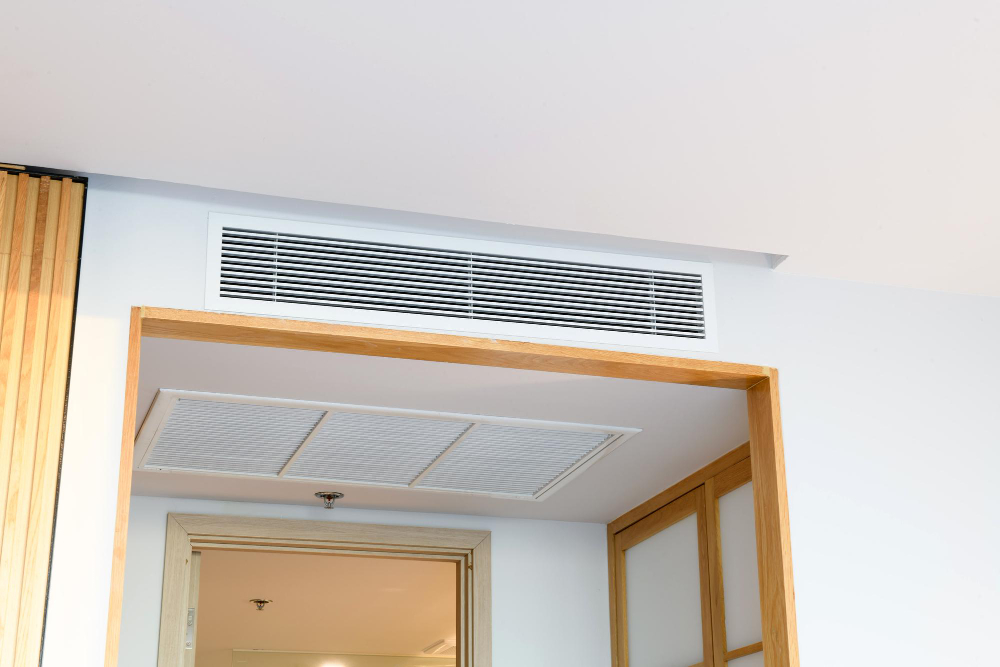
This distinction matters because the causes are different and the urgency is different. Hold your hand flat over a supply vent while the system is running. If you feel absolutely nothing, not even a faint movement of air, the blower is not spinning. If you feel something but it is barely there, the blower is running but something is restricting or diverting the air before it reaches the vent.
Zero airflow at every vent in the house points to a system-wide cause: the blower motor, the blower’s power supply, or a control signal that never told the blower to start. Zero airflow at one or two vents while the rest of the house gets air points to a duct-level cause: a disconnect, a collapse, or a damper that closed.
Each scenario has its own diagnostic path, and confusing the two leads to wasted time. A homeowner who spends an hour inspecting ductwork when the real problem is a dead blower motor loses an hour they could have spent getting the right help.
The sections below are organized from the most common whole-house causes to the most common single-vent causes, so you can work through them in the order that is most likely to find the problem fast.
The blower motor quit and nobody heard it happen
The blower motor is the only component in your HVAC system that physically moves air through the house. When it stops, every vent goes silent. The compressor may still run outside, the thermostat may still display the setpoint, but no air reaches any room because the engine of the distribution system is offline.
Blower motors fail for several reasons, and most of them give subtle warnings before the final shutdown. The problem is that most homeowners do not hear or feel those warnings because the blower lives inside a cabinet in a closet, attic, or basement.
A dead capacitor is the most common culprit
The blower motor relies on a run capacitor to maintain its operating speed. When the capacitor fails, the motor either cannot start at all or starts sluggishly and overheats within minutes. A failing capacitor often gives a warning in the days before it dies:
- The blower takes a few extra seconds to reach full speed after the system kicks on
- A humming sound comes from the air handler when the thermostat calls for cooling, but the fan does not spin up
- Airflow feels slightly weaker than it used to, then drops off suddenly
Capacitors are inexpensive components, typically $150 to $300 to replace during a service call. But a capacitor that fails during a weekend in July costs more than the same replacement during a scheduled AC tune-up in April. This is one of the components a maintenance visit specifically tests to catch before it reaches that point.
The motor itself burned out
Blower motors that run thousands of hours per year eventually wear out. Bearings develop friction. Windings degrade. Overheating from restricted airflow, usually caused by months of running on a clogged filter, accelerates the process. When the motor burns out, it stops completely and the house goes silent.
Signs that the motor is nearing failure, not just the capacitor, include:
- A grinding or scraping sound that has been getting louder over weeks
- A burning smell from the air handler cabinet
- The motor runs intermittently, working for a few minutes and then stopping before restarting
- The circuit breaker for the air handler trips when the system tries to start
Motor replacement is a more involved repair than a capacitor swap, typically running $400 to $1,200 depending on the motor type and accessibility. But the alternative, running without airflow in an Owasso summer, is not a viable option. If the motor has failed, calling for professional HVAC repair is the only path to restoring airflow.
Your ductwork has a problem it cannot tell you about
If the blower is running and you can feel airflow at some vents but nothing at others, the problem is almost certainly in the ductwork. Ducts run through attics, crawlspaces, and wall cavities where homeowners rarely go and never inspect. A problem can develop and persist for months before anyone notices that a specific room stopped getting air.
A flex duct disconnected from its collar
Flex duct connects to the trunk line and to the vent boot with metal collars held in place by zip ties or clamps and sealed with mastic or tape. Over time, the connections can fail. Tape dries out and releases. Zip ties snap. The weight of the duct pulls it free from the collar, and the air that was supposed to reach the room dumps into the attic instead.
When this happens, the affected room gets zero air while the rest of the house may actually get slightly more, because the system’s total static pressure drops and the remaining runs benefit from the reduced resistance. You might not notice a disconnect immediately, especially if the room is a guest bedroom or a space you do not use daily.
According to ENERGY STAR, a typical home loses 20 to 30 percent of its conditioned air through leaks, holes, and poorly connected ducts. A full disconnect is the extreme version of that statistic, sending 100 percent of that run’s airflow into unconditioned space.
If you can safely access your attic, a visual inspection of the duct runs can reveal an obvious disconnect. Look for:
- A section of flex duct lying loose on the attic floor, no longer attached to a collar or boot
- A vent boot with an open, empty collar where the duct should connect
- A section of flex duct that has pulled partially free and is hanging loose at a joint
- Daylight visible through a gap at a connection point
Reconnecting a loose duct is a straightforward repair if you can reach the joint. Secure the inner liner to the collar, then the outer jacket, using metal clamps and mastic sealant. If the disconnect is in a location you cannot reach, a technician can handle it quickly.
A crushed or collapsed section
Flex duct is light and flexible, which makes it easy to install but also easy to damage. A box stored on top of a duct run in the attic can crush it flat. A person stepping on a duct while accessing equipment or storage can collapse the inner liner. Even a run that was not properly supported at installation can sag between hangers until the bend is tight enough to choke off airflow entirely.
The symptoms mirror a disconnect: one or two rooms get no air while the rest of the house performs normally. The difference is that the duct is still attached at both ends but the airway inside is blocked.
Straightening, resupporting, or replacing the damaged section restores airflow immediately. If the duct has been crushed long enough for the inner liner to crack, replacement of that section is the better repair.
Something froze that should not be frozen
A frozen evaporator coil blocks airflow as effectively as a wall. When ice builds up on the coil, it fills the gaps between the fins and prevents air from passing through. The blower keeps running, but the air it pushes has nowhere to go, and the vents in the house feel like they have shut off.
This is one of the most common causes of sudden airflow loss during an Owasso summer. The system was working fine yesterday, and today the vents are dead. The coil froze overnight or during the early hours of a long cooling cycle, and by morning the ice is thick enough to block the entire coil surface.
Why the coil froze in the first place
The two most common triggers are airflow restriction and low refrigerant, and both are covered extensively in this article’s companion piece on AC icing in the Tulsa metro. The short version:
- A clogged air filter restricts warm air from reaching the coil. Without that warm air, the coil drops below freezing and moisture in the humid Oklahoma air condenses and freezes on the surface.
- A refrigerant leak reduces the pressure inside the coil, which lowers its temperature below the freezing point. Ice forms for the same reason, but the root cause is chemical rather than mechanical.
Either way, the result is the same: a wall of ice that the blower cannot push air through.
What to do when you suspect a frozen coil
If you notice that the vents stopped producing air and the system is still running, check the large copper refrigerant line where it enters the house or connects to the air handler. If it is coated in frost or ice, the evaporator coil is almost certainly frozen.
The correct response follows a specific sequence:
- Turn the thermostat to “off” or switch it to “fan only.” Do not keep running the compressor against a frozen coil. That damages the compressor.
- Let the coil thaw completely. This can take two to six hours depending on how thick the ice is. Do not try to chip or scrape it off.
- While the coil thaws, check the air filter and replace it if it is dirty.
- Once the ice has fully melted and the drain pan has emptied, restart the system in cooling mode and monitor it closely.
- If the coil freezes again within a day, the cause is not the filter. Shut the system down and call for service.
A coil that freezes once on a dirty filter is a wake-up call. A coil that freezes again on a clean filter is a refrigerant problem that requires a technician with gauges and leak detection equipment.
Electrical faults that kill the fan without tripping anything obvious
Not every electrical problem trips a breaker. Some faults are subtle enough that the system partially operates, the thermostat displays normally, the compressor runs outside, but the blower inside never receives the signal to start. These are frustrating because everything appears to be working until you notice the vents are silent.
A bad relay or control board
The control board in the air handler is the brain that tells each component when to start and stop. When the thermostat calls for cooling, the control board sends a signal to the compressor and a separate signal to the blower. If the board has a failed relay or a burned-out component, it may start the compressor but never engage the blower.
The symptoms are distinctive:
- You hear the outdoor unit running normally
- The thermostat shows the system is active and calling for cooling
- No air comes from any vent in the house
- No sound at all from the indoor air handler
This combination almost always points to a control board or relay failure. The board needs professional diagnosis because it involves low-voltage wiring and component-level testing that requires training and the right tools.
A tripped safety switch you did not know existed
Many air handlers include a safety switch on the access panel that cuts power to the blower when the panel is removed. If the panel was not fully reseated after a filter change or a previous service call, the switch may be disengaged. The system looks like it should be running, but the blower has no power.
Some systems also have a condensate overflow float switch that shuts down the system when the drain pan fills. If the condensate drain clogged and the pan is full, this switch may have tripped. In that case, the fix involves clearing the drain, emptying the pan, and resetting the switch.
Both of these are worth checking before calling for service, because both are simple to resolve if you know they exist. Check the air handler panel to make sure it is fully seated and latched. Look at the drain pan beneath the coil. If it is full of water, the condensate drain needs clearing.
Fifteen minutes with a flashlight before you pick up the phone
Before calling for service, a quick walk-through of the most common homeowner-fixable causes can save a service fee or at least give the technician a head start on the diagnosis.
Work through these steps in order:
- Check the thermostat. Confirm it is set to “cool” and the fan is set to “auto” or “on.” Replace the batteries if the display is dim or blank. Try switching the fan to “on” manually to see if the blower starts independent of the cooling cycle.
- Check the air filter. Pull it out and inspect it. If it is visibly clogged, replace it immediately. A severely restricted filter can cause a frozen coil, which blocks all airflow.
- Check the breaker panel. Look for any tripped breakers and reset them once. If the breaker trips again immediately, leave it off and call for service.
- Check the air handler panel. Make sure the access panel is fully closed and latched. Press firmly on it. If you hear the blower engage when the panel clicks into place, the safety switch was the issue.
- Check the drain pan. If you can access the air handler, look beneath the evaporator coil for standing water. A full pan indicates a clogged drain that may have tripped the overflow switch.
- Check the refrigerant line. Look at the large copper line near the air handler for frost or ice. If it is frosted, the coil is frozen and you need to thaw it before the system will move air.
- Check the outdoor unit. Confirm the condenser is running. If the fan is not spinning and you do not hear the compressor, the outdoor unit may have its own electrical issue.
If none of these steps restores airflow, the problem is beyond the homeowner checklist. The blower motor, the capacitor, the control board, or the ductwork in an inaccessible location needs a technician.
When the answer is not a filter swap
Some airflow losses are quick fixes. A clogged filter, a tripped safety switch, a breaker that needs resetting. Others require professional equipment and training: a burned-out blower motor, a failed control board, a refrigerant leak that froze the coil solid, or a duct disconnect deep in the attic where you cannot safely reach.
The dividing line is clear. If you have worked through the homeowner checklist and the vents are still silent, the problem lives inside the equipment or inside the duct system, and both require a trained technician to diagnose and repair safely.
According to the U.S. Department of Energy, the difference in energy consumption between a well-maintained HVAC system and a neglected one can range from 10 to 25 percent. But when the system has crossed the line from inefficient to non-functional, the immediate concern is not efficiency. It is getting air moving again before the house becomes uninhabitable in the Owasso heat.
A maintenance membership reduces the odds of reaching this point by catching the precursors, the weak capacitor, the slowly clogging drain, the filter that should have been changed a month ago, during scheduled visits before they escalate into a total airflow loss. But when the loss has already happened, the priority is fast, competent diagnosis and repair.
Conclusion
An Owasso summer does not pause while you troubleshoot. Every hour without airflow adds heat and humidity to the house, stresses people and pets, and pushes perishable food and sensitive electronics closer to their limits. The faster you identify whether the problem is something you can fix or something that needs a professional, the faster you get back to normal.
Run through the homeowner checklist. If it does not solve the problem, do not keep experimenting with the equipment. Kinty Jones Heating and Cooling serves the Owasso and Tulsa metro area and can diagnose the cause, make the repair, and get air flowing through your vents again. Reach out now and let a technician handle the part the flashlight cannot reach.