A reliable thermostat repair process keeps your home’s temperature consistent and your HVAC system running efficiently. When your thermostat fails, it can throw off both your comfort and your energy bills, making timely repair essential for Bentonville homeowners.
When your home feels too hot or too cold no matter what you adjust, your thermostat might be the problem. A broken thermostat can make your heating and cooling system work poorly or not respond at all. The good news is that many thermostat issues can be fixed without replacing the whole unit.
Most thermostat problems come from dead batteries, incorrect settings, wiring issues, or a tripped breaker, and you can often solve these issues yourself or with help from a technician. Simple fixes like changing batteries or adjusting your settings might be all you need. More complex problems with wiring or smart thermostat features may require professional help.
Understanding what causes thermostat failures helps you know when to try a quick fix and when to call an expert. This guide walks you through common thermostat problems and shows you how professionals diagnose and repair these issues to restore comfort in your home.
In this article, here’s what you’ll find:
- Resolving home temperature discrepancies
- Issues that disrupt HVAC operation
- Challenges with smart thermostats
- Benefits of professional thermostat repair
- Typical steps in a Bentonville thermostat service visit
Keep reading to learn how proper thermostat repair restores accurate temperature control, protects your HVAC system, and helps you save on energy costs year-round.
Resolving home temperature discrepancies
Temperature differences between your thermostat setting and actual room conditions stem from specific system behaviors and environmental factors. Understanding these patterns helps you identify whether the issue requires calibration, repair, or system adjustments.
The impact of minor temperature variations
A temperature difference of 2-3 degrees between your thermostat and room temperature falls within normal operating range for most systems. Your thermostat typically cycles your HVAC system on and off to maintain temperatures within this buffer zone rather than running constantly.
Discrepancies exceeding 5 degrees indicate a problem that needs attention. Common causes include sensor drift, poor thermostat placement, or calibration issues. A thermostat mounted near heat sources like lamps, appliances, or direct sunlight will read artificially high temperatures and shut off cooling too early. According to the U.S. Department of Energy, you can save as much as 10 percent a year on heating and cooling by simply turning your thermostat back 7 to 10 degrees Fahrenheit from its normal setting for 8 hours a day, which makes accurate temperature readings even more important for managing energy costs.
If you notice variations of 10-20 degrees, you likely have a serious malfunction. Check that your thermostat hasn’t been installed on an exterior wall where outdoor temperatures influence readings. Dust buildup inside the thermostat housing can also insulate the sensor and cause inaccurate measurements.
Delayed HVAC response initiated by thermostat issues
Your system should respond within 30-60 seconds after you adjust the thermostat setting. Longer delays suggest wiring problems, failing relays, or communication issues between the thermostat and HVAC equipment.
Loose wire connections prevent proper signal transmission. Turn off power at your breaker and inspect the wiring terminals on both your thermostat and furnace or air handler. Tighten any loose connections and look for corroded wires that need replacement.
Anticipator settings on older mechanical thermostats control how long your system runs during each cycle. If adjusted incorrectly, your system may short cycle or run too long. Digital thermostats use cycle rate settings that serve the same function.
Room-to-room inconsistencies despite stable thermostat settings
Your thermostat only measures temperature at its specific location. Rooms farther from your HVAC unit or on different floors frequently show temperature variations of 5-10 degrees from the thermostat reading.
Closed or blocked vents in certain rooms restrict airflow and create hot or cold spots. Walk through your home and ensure furniture, curtains, or storage items aren’t blocking supply or return vents. Proper hvac ventilation services can help address persistent airflow issues across rooms.
Inadequate insulation in specific areas causes those rooms to lose conditioned air faster. Attics, basements, and rooms above garages often lack proper insulation compared to central living spaces. Ductwork problems also contribute to uneven temperatures. Leaky ducts waste conditioned air before it reaches certain rooms, while undersized ducts fail to deliver adequate airflow.
Issues that disrupt HVAC operation
When your thermostat fails to communicate properly with your HVAC system, it creates problems that range from constant cycling to complete system shutdown. These disruptions typically stem from faulty temperature readings, power issues, or incorrect sensor positioning.
Incorrect readings leading to system cycling
Your thermostat relies on accurate temperature readings to control when your HVAC system turns on and off. When the sensor inside your thermostat reports the wrong temperature, your system responds based on false information.
This causes short cycling, where your air conditioner or heater turns on and off repeatedly in short bursts. Your system might run for just a few minutes before shutting down, then restart moments later. This pattern wastes energy and puts extra strain on your equipment, sometimes leading to the need for ac system repair services sooner than expected.
A thermostat not reading the correct temperature fix often involves recalibrating the device. You can test accuracy by placing a reliable thermometer next to your thermostat and comparing readings after 15 minutes. If the difference is more than two degrees, your thermostat needs adjustment or replacement.
Dust buildup on internal sensors can also throw off readings. Opening your thermostat and gently cleaning the sensor with a soft brush may restore accuracy.
Battery and wiring failures behind sudden malfunctions
Dead batteries are among the most common causes of thermostat failure. Most battery-powered thermostats display a low battery warning, but some units simply stop working without notice.
Replace batteries once per year to prevent sudden shutdowns. When your AC is not responding to thermostat commands, check the battery compartment first before calling for repairs.
Common wiring problems include:
- Loose wire connections at terminal screws
- Corroded wires from moisture exposure
- Damaged insulation causing short circuits
- Incorrect wire placement after previous repairs
Wiring issues often develop gradually. You might notice your system working intermittently before it stops completely. A loose wire at the R (power) or C (common) terminal can prevent your thermostat from receiving power. Inspect visible wiring for fraying, discoloration, or disconnected terminals.
Effects of poor sensor placement
Your thermostat location directly affects its ability to measure your home’s actual temperature. When mounted in the wrong spot, it triggers your HVAC system at the wrong times.
Thermostats placed near windows receive direct sunlight that heats up the sensor. This makes your thermostat think your home is warmer than it actually is, causing your air conditioner to run excessively. Heat from nearby appliances, lamps, or doorways to unconditioned spaces creates similar problems.
Installing your thermostat on an exterior wall exposes it to outside temperatures that seep through the wall. Cold spots in winter or warm spots in summer affect sensor accuracy. Interior walls away from direct airflow provide the most stable readings.
Your thermostat should sit about five feet off the floor in a frequently used room. Avoid hallways, kitchens, and areas near supply vents where airflow directly hits the sensor.
Challenges with smart thermostats
Smart thermostats offer advanced features but come with technical issues that traditional models don’t face. Connection drops, software glitches, and older HVAC systems create frustration for many homeowners.
Wi-Fi connection problems and system access
Your smart thermostat needs a stable internet connection to work properly. When your Wi-Fi signal is weak or your router is too far away, the device loses its connection and stops responding to commands from your phone or voice assistant.
Distance between your router and thermostat matters. If they’re on opposite ends of your home, the signal may not reach. Thick walls and metal ductwork also block Wi-Fi signals.
Router changes cause problems too. When you get a new router or change your Wi-Fi password, you need to reconnect your thermostat manually. Many people forget this step and wonder why their device stopped working.
Common Wi-Fi issues include:
- Dropped connections during peak usage hours
- Inability to access the thermostat through mobile apps
- Failed firmware updates that require internet access
- Error messages about network connectivity
Your thermostat may also struggle if too many devices are connected to your network at once. This creates bandwidth issues that prevent the thermostat from communicating with your HVAC system or sending data to the cloud.
Calibration mistakes after updates
Software updates sometimes change your thermostat’s temperature readings. You might notice your home feels warmer or cooler than the displayed temperature after an update installs.
The thermostat’s sensors can drift out of alignment during the update process. This makes the device read temperatures incorrectly by two or three degrees. Your HVAC system then runs too much or not enough, which can be confirmed during an ac system inspection service.
You need to recalibrate the device manually after major updates. Most smart thermostats have a calibration setting in their advanced options menu. You’ll need an accurate thermometer to compare readings and adjust the offset.
Location problems also appear after updates reset your settings. If your thermostat is near a window, door, or vent, temperature readings won’t match the rest of your home. Some updates restore factory settings and erase custom configurations you set up for your specific installation spot.
Compatibility problems with older equipment
Older HVAC systems weren’t designed to work with smart thermostats. Your heating and cooling equipment may lack the right wiring or voltage requirements that modern thermostats need. According to the U.S. Environmental Protection Agency, ENERGY STAR certified smart thermostats can save approximately 8 percent on heating and cooling costs annually, but realizing those savings depends on proper compatibility with your existing system.
Most smart thermostats need a C-wire (common wire) to provide constant power. Many homes built before 2000 don’t have this wire installed. Without it, your thermostat’s battery drains quickly or the device shuts off completely.
Compatibility issues you might face:
Equipment type Common problem Heat pumps Incorrect wiring causes backup heat to run constantly Millivolt systems Smart thermostats can’t provide enough power Multi-stage systems Thermostat doesn’t control all heating or cooling stages Zone control systems Smart features conflict with zone dampers
Your older furnace or air conditioner may also cycle on and off too quickly with a smart thermostat. These systems expect longer run times that traditional thermostats provided. Smart thermostats use shorter cycles to save energy, which can damage older equipment not built for this pattern, especially without regular preventive ac system tune up service.
Benefits of professional thermostat repair
Professional repair services address complex technical issues that basic troubleshooting cannot fix. Trained technicians use specialized tools to diagnose wiring faults, recalibrate sensors, and determine whether your system needs repairs or replacement.
Wiring and control board testing
Your thermostat relies on precise electrical connections to communicate with your HVAC system. A professional technician can identify loose wires, corroded connections, and faulty terminals that cause your system to short-cycle or fail to start. They use multimeters and voltage testers to check power supply issues and verify proper current flow.
Control board problems require diagnostic equipment to detect. A malfunctioning board sends incorrect signals to your heating and cooling equipment, leading to temperature inconsistencies and system failures. Technicians test control board circuits, replace damaged components, and ensure all connections meet safety codes.
Most wiring and control board issues look identical to homeowners but have different causes. A trained professional can distinguish between a dead battery, a tripped circuit breaker, and actual board failure. They complete these diagnostics in 30 to 60 minutes and prevent unnecessary part replacements.
Precision sensor recalibration
Temperature sensors drift out of calibration over time, causing your thermostat to display incorrect readings. Professional technicians use calibrated reference thermometers to measure the actual room temperature and compare it to your thermostat’s display. They adjust the sensor to restore accuracy within one or two degrees.
Sensor placement affects performance more than most people realize. A technician evaluates whether sunlight, drafts, or heat sources near your thermostat create false readings. They recommend relocation when environmental factors prevent proper calibration.
Dirt and dust buildup on sensors creates measurement errors. Professionals clean sensor components using appropriate tools and methods that won’t damage delicate parts.
Assessment for repair versus replacement
A qualified technician evaluates your thermostat’s age, condition, and repair costs against replacement options. Thermostats older than 10 years often cost more to repair than replace, especially when factoring in energy savings from newer models.
Compatibility issues require professional assessment. Your existing thermostat might not work efficiently with your current HVAC equipment, or upcoming repairs might exceed the unit’s remaining lifespan. Technicians check voltage requirements, system compatibility, and available features to provide accurate recommendations. In some cases, a complete cooling system installation may be recommended when older equipment can’t support modern thermostat technology.
Warranty coverage affects repair decisions significantly. Professional diagnosis documents the problem and ensures repairs meet manufacturer requirements. This protects your HVAC system warranty and qualifies you for coverage on parts and labor when applicable.
Typical steps in a Bentonville thermostat service visit
A professional thermostat service visit follows a clear process to identify and fix problems with your heating and cooling system. Technicians test your device’s signals, choose the right repair approach, and make sure your home maintains steady temperatures.
Comprehensive signal and system testing
Your HVAC technician starts by checking how your thermostat communicates with your heating and cooling equipment. They test the electrical connections between your thermostat and HVAC system to find any signal interruptions or wiring problems.
The technician measures voltage levels at the thermostat terminals. They also inspect wire connections for corrosion, loose attachments, or damaged insulation that could prevent proper operation.
During hvac thermostat troubleshooting service, the tech examines these key components:
- Power supply to verify the thermostat receives adequate voltage
- Temperature sensors to confirm accurate readings
- Control board signals that tell your HVAC system when to turn on or off
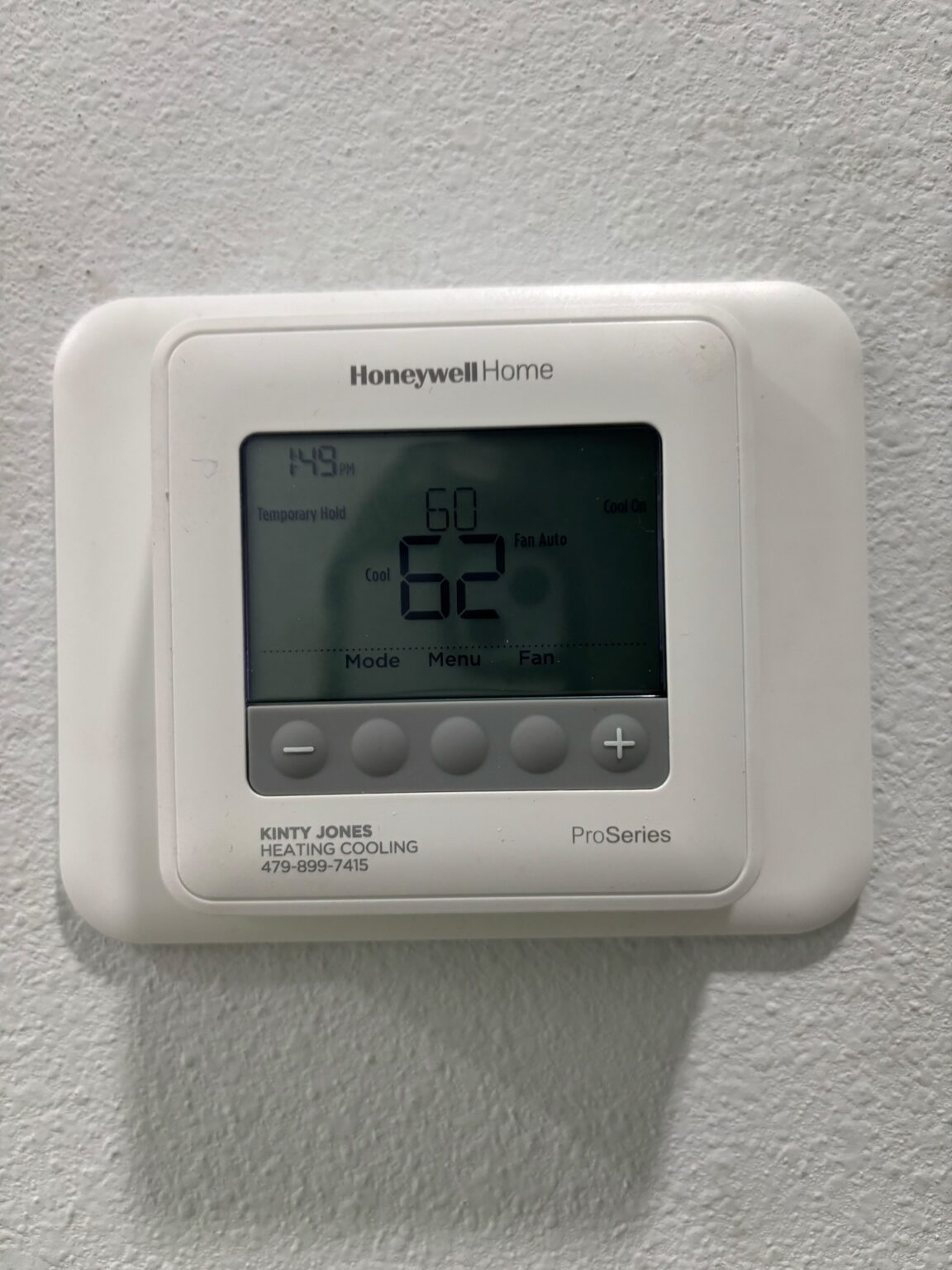
- Display functions to check for error codes or malfunctions
They may use a multimeter to measure electrical current and identify where signals fail. This testing reveals whether your problem stems from the thermostat itself or from your heating and cooling system.
Fast solutions versus in-depth diagnostics
Simple thermostat issues often get fixed quickly during the initial visit. Your technician might replace dead batteries, adjust loose wires, or recalibrate temperature settings within minutes.
More complex problems require detailed investigation. If basic fixes don’t restore function, the technician performs deeper system checks. They might test your HVAC equipment’s response to thermostat commands or examine compatibility between newer thermostats and older systems.
Some repairs need specialized parts or equipment not available during the first visit. Your technician will explain what they found and provide a clear plan for completing the repair, which may include scheduling emergency air conditioning repair if the issue is leaving your home without cooling.
Stable temperature control verification
After completing repairs, your technician tests whether your thermostat maintains consistent temperatures. They adjust your thermostat settings and monitor how quickly your HVAC system responds.
The tech confirms your heating or cooling cycles start and stop at the correct times. They verify the temperature displayed on your thermostat matches the actual room temperature using calibrated testing equipment.
You’ll see them check that your system doesn’t short cycle (turn on and off too frequently) or run continuously without reaching the set temperature. This final verification ensures your residential cooling and heating performance stays comfortable after the service visit ends.
Conclusion
Your thermostat controls your home’s comfort and energy use. When it stops working right, you need to act quickly to avoid discomfort and higher utility bills.
Many thermostat problems are simple to fix on your own. Dead batteries, dirty components, and incorrect settings account for most issues. You can handle these repairs with basic tools and a few minutes of your time.
Sometimes replacement makes more sense than repair. If your thermostat is over 10 years old or requires multiple repairs, a new unit saves you money in the long run. Modern thermostats offer better accuracy and energy savings.
Keep your thermostat working well with regular maintenance. Check batteries twice a year, clean the unit every few months, and update settings when seasons change.
You should address thermostat problems as soon as you notice them. Small issues can strain your entire HVAC system and lead to bigger repairs. A working thermostat protects your comfort and your wallet.
Most homeowners can troubleshoot basic thermostat problems successfully. Start with simple fixes before calling for help. You’ll save money and learn valuable skills for maintaining your home’s climate control system. For expert thermostat repair in Bentonville, contact Kinty Jones today.