Heat waves in Northwest Arkansas push air conditioners to their absolute limits, and how to keep your AC running during heat waves comes down to preparation more than luck. When temperatures in Bentonville, Rogers, Fayetteville, and Springdale climb past 95 degrees and stay there for days, your cooling system runs longer cycles, works harder to pull moisture from humid air, and faces mechanical stress that can turn a small weakness into a full breakdown.
The combination of high heat and high humidity is what makes Northwest Arkansas summers so punishing for residential cooling equipment. According to the U.S. Energy Information Administration, air conditioning accounts for roughly 19% of all electricity consumed in American homes, and that share spikes dramatically in regions where systems run nearly around the clock during peak summer. Your AC was designed to handle normal demand, but a sustained heat wave is not normal demand.
Most breakdowns during extreme heat are not random failures. They are the result of overlooked maintenance, aging parts, or airflow problems that were manageable in milder weather but collapse under sustained high temperatures. The good news is that the majority of those failures are preventable with the right habits and timely professional attention.
In this article, you will learn about:
- Why Northwest Arkansas heat waves are so hard on your AC
- The maintenance steps that prevent mid-summer breakdowns
- How to get the most cooling from your system without overworking it
- Warning signs your AC is struggling before it fails completely
- When a professional inspection makes more sense than waiting it out
Keep reading to learn how a few practical steps can protect your cooling system, lower your energy costs, and keep your home comfortable through the worst of summer.
Why Northwest Arkansas heat waves hit your AC harder than you think
Every air conditioner has a design temperature range where it operates most efficiently, and prolonged heat waves push systems well past that range. When outdoor temperatures stay above 95 degrees for multiple consecutive days, your condenser coil struggles to release heat because the temperature difference between the refrigerant and the outside air shrinks. The result is longer run cycles, higher energy consumption, and accelerated wear on compressors, capacitors, and fan motors.
Northwest Arkansas sits in a climate zone where summer heat and humidity combine in ways that compound the load on residential cooling equipment. Fayetteville, Rogers, Bella Vista, and Springdale all experience stretches where heat index values climb well above the actual air temperature, and your system has to manage both sensible heat and latent moisture removal at the same time.
Your system was sized for average conditions, not extreme ones
Most residential AC systems are sized based on a design temperature that represents typical peak conditions for the area, not the absolute worst-case scenario. In Northwest Arkansas, that design temperature usually falls somewhere around 95 degrees. When a heat wave pushes temperatures past 100 and heat index values reach 110 or higher, your system is being asked to do more work than it was calculated to handle.
That does not mean your system is undersized or defective. It means the equipment is operating in conditions that fall outside its most efficient range, and any existing weakness becomes amplified. A slightly dirty filter, a refrigerant charge that is a few ounces low, or a capacitor that has weakened over time can all push a system from struggling to failing when sustained heat removes any margin for error.
The practical takeaway is straightforward. If your system barely keeps up on a normal 93-degree day, it will fall behind on a 102-degree day. Preparation before the heat wave arrives is what separates homes that stay cool from homes that end up on an emergency repair waitlist.
Humidity is the invisible load that exhausts your compressor
Temperature gets all the attention, but humidity is the hidden factor that grinds down air conditioning performance during Northwest Arkansas summers. When relative humidity climbs above 60%, your AC has to work significantly harder because a large portion of its capacity goes toward pulling moisture out of the air rather than lowering the temperature.
This is why a home can feel sticky and uncomfortable even when the thermostat reads 74 degrees. The system may be maintaining the temperature set point but falling behind on dehumidification, which forces longer run cycles and higher electricity bills. In Bentonville and Rogers, summer humidity regularly pushes past 70% during morning and evening hours, and that sustained moisture load wears down compressors and increases the risk of frozen evaporator coils.
Homes with poor indoor air quality or inadequate ventilation often compound this problem because stale, humid air recirculates through the system without ever reaching comfortable moisture levels.
Consecutive hot days create cumulative stress your system cannot shake off
A single 98-degree afternoon is manageable for most healthy AC systems. Three or four consecutive days at that temperature, with overnight lows that never drop below 75, is a fundamentally different challenge. During cooler nights, your compressor gets a chance to rest and cycle down, but when overnight temperatures stay elevated, the system never fully recovers from the previous day’s workload.
This cumulative stress is what causes mid-heat-wave failures that seem to come out of nowhere. The compressor has been running at near-maximum capacity for 48 or 72 hours straight, and a component that was already weakened finally gives out. Capacitors are a common casualty because they degrade incrementally under sustained load, and a heat wave accelerates that degradation.
The U.S. Department of Energy notes that heating and cooling buildings accounts for around 35% of all energy consumption nationally, the largest share of any end use. During a heat wave, your home’s contribution to that number climbs sharply as the system fights to overcome conditions it was not designed to sustain indefinitely.
Maintenance steps that actually prevent mid-summer breakdowns
The most effective thing you can do to keep your AC running through a heat wave is to make sure it enters summer in peak condition. Reactive maintenance, the kind where you call for help after something breaks, almost always costs more and takes longer than proactive care. Every hour your system runs with a dirty filter, a weak capacitor, or low refrigerant is an hour of accelerated wear that compounds over time.
A well-maintained air conditioner can handle heat wave conditions far better than a neglected one, even if both systems are the same age and model. The difference is not about the equipment itself. It is about the condition of the equipment when the stress arrives.
Change your air filter before the heat wave, not during it
This is the single most accessible maintenance task any homeowner can do, and it has a disproportionate impact on how your system handles extreme heat. A clogged or dirty filter restricts airflow across the evaporator coil, which forces the blower to work harder, reduces the system’s cooling capacity, and can cause the coil to freeze over entirely.
The U.S. Department of Energy reports that replacing a dirty filter with a clean one can reduce an air conditioner’s energy consumption by 5% to 15%. During a heat wave, that efficiency difference translates directly into whether your system can keep up with demand or falls behind.
Here is a practical filter schedule for Northwest Arkansas summers:
- Check your filter at least once a month from May through September
- Replace disposable filters every 30 to 60 days during peak cooling season, depending on household dust levels, pets, and allergy concerns
- If you use a washable or reusable filter, rinse and dry it completely before reinstalling
A clean filter costs a few dollars. An emergency AC service call during a heat wave can cost significantly more and may come with a multi-day wait when every HVAC company in the region is booked solid.
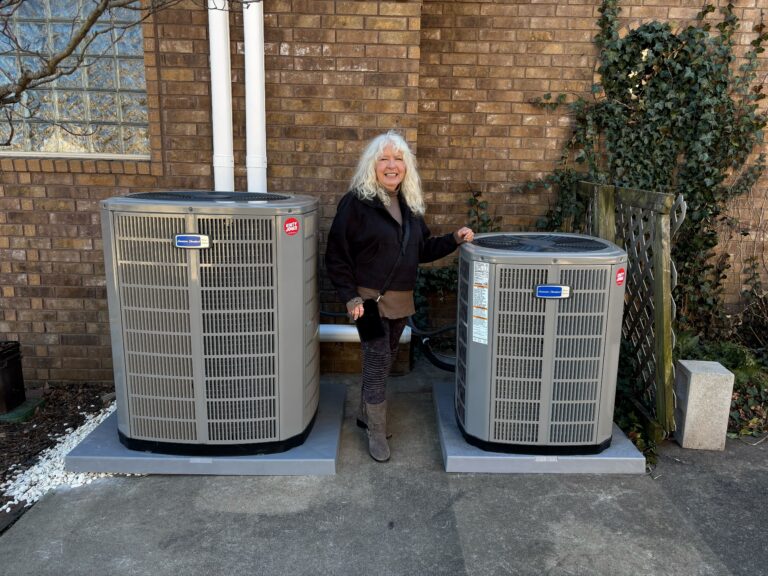
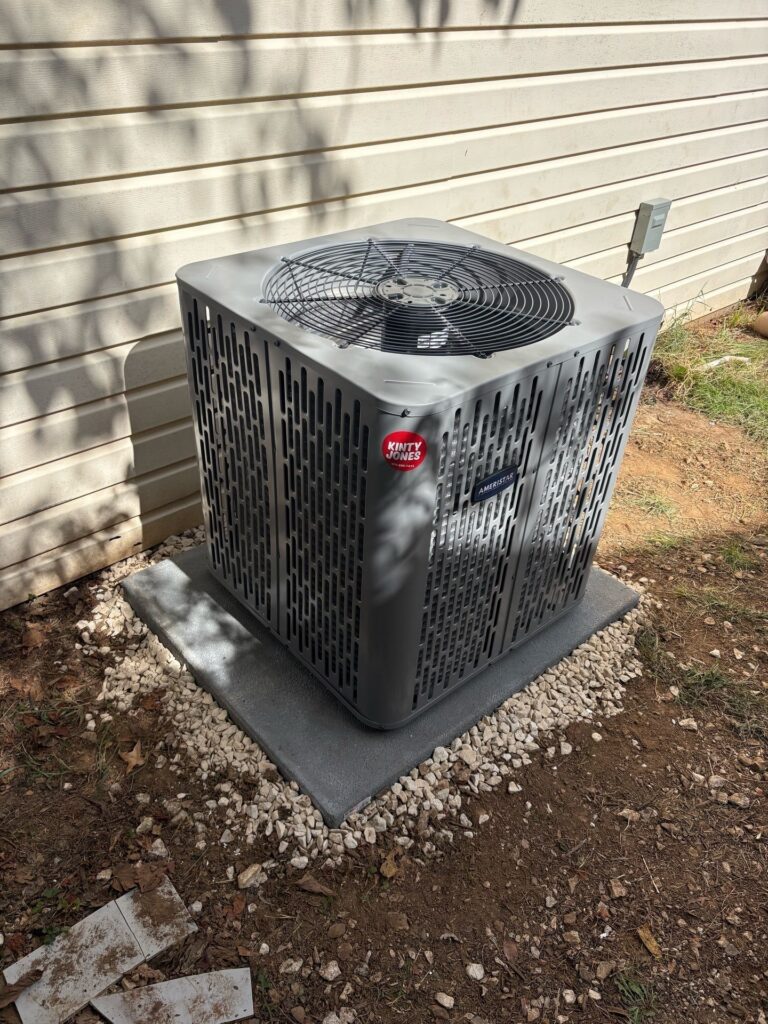
Keep the outdoor condenser unit clear and unobstructed
Your condenser unit is the part of the system that sits outside, and it needs open airflow to release the heat it pulls from inside your home. When vegetation, debris, patio furniture, or fencing crowds the unit, it cannot dissipate heat efficiently, and the compressor has to work harder to achieve the same cooling output.
Walk around your outdoor unit and check for these common obstructions:
- Trim any bushes, shrubs, or grass within at least two feet of the unit on all sides
- Remove leaves, grass clippings, and debris that have collected on or around the condenser fins
- Gently rinse the condenser coils with a garden hose to remove dirt and pollen buildup, spraying from the inside out
- Make sure no structures, tarps, or covers are restricting airflow above the unit
This takes about 15 minutes and can meaningfully improve your system’s ability to reject heat during extreme outdoor temperatures. A condenser that is even partially blocked during a 100-degree day has to compensate by running longer cycles, which drives up energy costs and accelerates component wear.
Schedule a professional tune up before peak heat arrives
A professional AC tune up goes deeper than what a homeowner can safely do. A trained technician checks refrigerant levels, tests electrical connections, inspects the capacitor and contactor, cleans the evaporator coil, verifies thermostat calibration, and evaluates overall system performance under load.
According to ENERGY STAR, nearly half of the energy used in an average home goes to heating and cooling, and proper maintenance is one of the most effective ways to keep that cost in check. A system that enters summer with the correct refrigerant charge, clean coils, and tight electrical connections will handle sustained heat far better than one running on deferred maintenance.
The best time to schedule this service is in spring, before the busy season, but even a mid-summer tune up is better than none. If your system has not been professionally serviced in over a year, booking a maintenance visit now can catch problems before the next heat wave exposes them.
How to get the most cooling from your system without burning it out
Once a heat wave is underway, your system is already under stress, and the goal shifts from optimization to survival. The decisions you make about thermostat settings, household habits, and supplemental cooling strategies can be the difference between a system that grinds through the heat and one that shuts down on the hottest afternoon of the year.
These are not dramatic changes. They are small, practical adjustments that reduce the total cooling load your AC has to carry, giving it a better chance of keeping up with demand without running itself into the ground.
Set your thermostat strategically instead of fighting the outdoor temperature
During a heat wave, the instinct is to crank the thermostat down to 68 or 70 degrees and hope for the best. That approach backfires because it forces the system to maintain a temperature gap of 30 degrees or more between indoors and outdoors, which is beyond what most residential equipment can sustain for extended periods.
The ENERGY STAR smart thermostat program estimates average savings of about 8% on heating and cooling bills for certified devices, and the Department of Energy reports that homeowners who set the temperature back 7 to 10 degrees for eight hours a day can save up to 10% annually on those same costs.
A few thermostat strategies that protect your system during extreme heat:
- Set the thermostat to 78 degrees and use ceiling fans to make the room feel several degrees cooler
- Avoid dropping the set point below 75 during a heat wave, as each degree lower forces significantly more runtime
- Use the “auto” fan setting rather than “on” so the blower cycles with the compressor instead of running continuously
- If you have a programmable or smart thermostat, pre-cool the house in the morning when the system can work more efficiently against lower outdoor temperatures
Fighting the outdoor temperature by setting an aggressive thermostat target does not cool the house faster. It just runs the system harder and longer, increasing the chance of a breakdown at the worst possible time.
Reduce internal heat sources during the hottest hours
Every appliance and activity that generates heat inside your home adds to the cooling load your AC has to overcome. During a heat wave, minimizing internal heat sources is one of the easiest ways to lighten the burden on your system and help it maintain a comfortable temperature.
The oven is the biggest offender. Running a 400-degree oven for an hour can raise the kitchen temperature by several degrees, and that heat migrates to the rest of the house. Stove-top cooking, dishwashers running their drying cycle, and even multiple incandescent light bulbs all contribute incremental heat that adds up during sustained high temperatures.
Practical ways to reduce internal heat gain:
- Grill outdoors or use a microwave, slow cooker, or air fryer instead of the oven
- Run the dishwasher and clothes dryer during cooler evening hours
- Switch remaining incandescent bulbs to LEDs, which produce significantly less heat
- Close blinds and curtains on south-facing and west-facing windows during peak sun hours
- Avoid leaving electronics running unnecessarily, especially older devices that generate noticeable heat
These adjustments will not transform your indoor temperature on their own, but collectively they reduce the thermal load your system has to manage, which means shorter run cycles and less stress on the compressor.
Use ceiling fans and airflow to supplement your AC, not replace it
Ceiling fans do not lower the air temperature. They create a wind-chill effect on skin that makes a room feel three to four degrees cooler, which allows you to raise the thermostat set point without sacrificing comfort. The combination of a ceiling fan and a thermostat set to 78 can feel as comfortable as 74 degrees without the fan, but with a fraction of the energy cost.
Make sure fans are set to spin counterclockwise in summer, pushing air downward. And turn them off when you leave the room, because a fan cools people, not spaces.
If certain rooms in your home consistently feel warmer than others, you may have airflow issues that are worth investigating before the next heat wave hits. Hot spots in a home often point to duct problems, inadequate insulation, or return-air imbalances that a professional can diagnose and correct.
Warning signs your AC is struggling before it quits on you
An air conditioner rarely fails without warning. In the days and weeks leading up to a heat-wave breakdown, the system almost always shows signs that something is off. Recognizing those signs early gives you a window to address the problem on your schedule instead of scrambling for emergency service when every HVAC company in Northwest Arkansas has a full board.
Paying attention to how your system sounds, how it cycles, and how your home feels is the best early-warning system you have.
The system runs constantly but the house never reaches the set temperature
If your thermostat is set to 76 and the indoor temperature sits at 79 or 80 despite the system running nonstop, something is wrong. During a heat wave, it is normal for a system to run longer cycles, but it should still be able to reach and hold the set temperature for at least part of the day, particularly in the morning and evening when outdoor temperatures dip slightly.
Constant running without reaching the set point often indicates one of several issues:
- Low refrigerant due to a slow leak, which reduces the system’s cooling capacity
- A dirty evaporator coil that cannot absorb enough heat from the indoor air
- Ductwork leaks that are dumping cooled air into unconditioned spaces like the attic or crawlspace
- A failing compressor that can no longer build adequate pressure
According to ENERGY STAR, leaky ducts alone can reduce heating and cooling system efficiency by as much as 20%. If your ductwork is losing conditioned air before it reaches your living spaces, even a perfectly functioning AC will struggle to keep up.
This is not a wait-and-see situation. If your system cannot hold the set temperature during a heat wave, calling for professional AC repair before the problem worsens is the right move.
You hear unusual noises, grinding, or clicking that were not there before
A healthy AC system produces a consistent hum from the blower and a steady drone from the outdoor compressor. New sounds, especially grinding, rattling, buzzing, or repetitive clicking, are almost always mechanical warnings that a component is failing.
Common noise sources during heat wave stress:
- Grinding from the blower motor, which may indicate worn bearings or a failing motor
- Clicking at the outdoor unit, which can point to a contactor that is struggling to engage or a failing capacitor
- Rattling inside the air handler, which often means a loose panel, a disconnected duct connection, or debris near the blower
- Hissing or bubbling from the refrigerant lines, which can indicate a refrigerant leak
The worst response to an unusual sound is to ignore it and hope it goes away. During a heat wave, a minor mechanical issue can escalate quickly because the system has no downtime to recover. A repair visit at the first sign of a new noise is far cheaper and faster than a full-system replacement after a compressor seizes.
Ice is forming on the refrigerant lines or the indoor coil
Ice on an air conditioner during the hottest week of the year seems contradictory, but it is one of the most common heat-wave failure modes. When airflow across the evaporator coil drops too low, or when refrigerant levels fall below the proper charge, the coil temperature plunges below freezing and moisture in the air freezes on its surface.
Once ice starts forming, it restricts airflow even further, which causes more ice to form, creating a cycle that can eventually freeze the entire coil solid and shut down cooling completely. Frozen coils in Springdale and across Northwest Arkansas are a regular occurrence during prolonged heat because the underlying causes, dirty filters and slow refrigerant leaks, get amplified by extended run times.
If you notice ice:
- Turn off the cooling mode but leave the fan running to circulate air across the coil and promote thawing
- Check the air filter immediately and replace it if it is dirty
- Let the coil thaw completely before attempting to restart cooling, which can take several hours
- If the ice returns after the filter is clean and the coil has thawed, call a technician because the problem is likely a refrigerant issue that requires professional diagnosis
Do not scrape or chip ice off the coil. You can damage the delicate fins and create a bigger problem than the one you are trying to fix.
When professional help is the smarter call than waiting it out
There is a clear line between maintenance tasks a homeowner can handle and problems that require professional equipment, training, and diagnostic tools. During a heat wave, that line matters more than usual because delays can turn a repairable issue into a catastrophic one. The system is already under maximum stress, and amateur troubleshooting beyond basic filter changes and thermostat checks risks making things worse.
Knowing when to call a professional is not a sign that you have done something wrong. It is a recognition that some failures require tools and expertise that homeowners do not have.
Refrigerant problems are never a DIY fix
Refrigerant is a regulated substance that requires EPA certification to handle, and the correct charge for your system is measured in ounces, not rough estimates. A system that is even slightly low on refrigerant loses cooling capacity, runs longer cycles, and stresses the compressor in ways that can cause permanent damage.
If your system is losing refrigerant, there is a leak somewhere in the sealed circuit, and simply adding more refrigerant without finding and repairing the leak is a temporary patch that will cost more in the long run. A qualified technician uses specialized tools to locate the leak, repair it, and recharge the system to the manufacturer’s specification.
Signs that point toward a refrigerant issue include warm air from the supply vents despite the system running, ice on the evaporator coil or refrigerant lines, a hissing sound near the indoor or outdoor unit, and a system that cycles on and off rapidly without cooling the house.
Electrical component failures need a technician with diagnostic tools
Capacitors, contactors, relays, and control boards are the electrical backbone of your AC system, and they are the components most likely to fail under sustained heat-wave stress. A failing capacitor is the single most common cause of heat-wave AC breakdowns because capacitors degrade gradually with use and temperature exposure, and a prolonged heat wave accelerates that degradation to its breaking point.
A homeowner cannot safely test or replace these components without proper training and equipment. High-voltage capacitors store a dangerous electrical charge even when the system is powered off, and incorrect handling can cause serious injury or further damage to the system.
When your system trips the breaker repeatedly, fails to start even though the thermostat is calling for cooling, or makes a humming noise without the compressor engaging, these are electrical symptoms that require a professional diagnostic. The CDC has documented that extreme heat is a leading cause of weather-related mortality in the United States, and losing cooling during a severe heat wave creates real health risks, especially for older adults and young children. Getting the system repaired quickly is not just about comfort.
A maintenance membership takes the guesswork out of seasonal preparation
If you find yourself scrambling every summer to schedule a tune up or wondering whether your system is ready for extreme heat, a maintenance membership eliminates that uncertainty. A membership plan with a trusted HVAC company ensures that your system gets inspected and serviced before peak season, so known issues are addressed well before they become heat-wave emergencies.
Membership plans typically include scheduled seasonal tune ups, priority booking during busy periods, and discounts on parts and repairs. The value is not just the individual services. It is the peace of mind that your system has been professionally evaluated before the high-stress season begins, and that if something does go wrong, you are at the front of the line instead of the back.
For homeowners in Bella Vista, Bentonville, Rogers, Fayetteville, and Springdale who rely on their AC for four to five months of serious cooling, a membership is one of the best investments in summer reliability you can make.
Conclusion
Heat waves in Northwest Arkansas are not a question of if but when, and your air conditioner’s ability to get through one depends almost entirely on what you do before and during the event. Clean filters, clear condenser space, professional maintenance, smart thermostat habits, and knowing when to call for help are the difference between a system that keeps running and one that leaves you without cooling on the worst possible day.
None of these steps are complicated or expensive compared to the cost of an emergency breakdown. The homeowners who stay comfortable through sustained heat are the ones who treat their AC as a system that needs attention, not an appliance they ignore until it stops working.
If your system has not been professionally serviced recently, or if you noticed anything off during the last stretch of hot weather, now is the time to act. Kinty Jones Heating and Cooling serves homes across Northwest Arkansas with honest diagnostics, experienced technicians, and the kind of practical service that keeps your cooling system ready for whatever summer throws at it.