If you have ever walked from a comfortable living room into a bedroom that feels ten degrees warmer, you already know the frustration of hot spots. Understanding why your home has hot spots in Bella Vista starts with the reality that Bella Vista sits in a humid subtropical climate where summer highs push toward 90 degrees and attic temperatures can climb well past 130. Your air conditioner may be running nonstop, but certain rooms never seem to catch up.
Hot spots are not just an annoyance. They signal that conditioned air is not reaching every part of your home the way the system was designed to deliver it. The causes are almost always physical, not mysterious.
Somewhere between the air handler and the room that will not cool, something is leaking, blocked, undersized, or missing entirely. The problem might be in the ducts, the insulation, the registers, the return air path, or the equipment itself.
The encouraging part is that most hot spot problems are diagnosable and fixable. Some are straightforward enough that a homeowner can address them in an afternoon. Others need a trained technician with the right tools. This article walks through the most common causes, explains what each one looks like in a Bella Vista home, and covers the solutions that actually work.
In this article, you will learn about:
- How ductwork problems create uneven temperatures throughout your house
- The role insulation and building envelope gaps play in hot rooms
- Equipment and airflow issues that limit your system’s reach
- What you can check and fix yourself before calling a professional
- Long-term improvements that eliminate hot spots for good
Keep reading to find out exactly where your home is losing the battle against the Bella Vista heat and what it takes to win it back, room by room.
How ductwork problems create uneven temperatures throughout your house
The duct system is the delivery network for your conditioned air. When it works correctly, every room receives roughly the amount of cool air it needs to maintain the thermostat’s set temperature. When it does not, some rooms get too much air and others get too little, and the rooms at the end of the line suffer the most.
Ductwork problems are the most common cause of hot spots in Northwest Arkansas homes because much of the ductwork runs through unconditioned attics and crawlspaces where it is exposed to extreme temperatures and physical damage.
Leaks, gaps, and disconnected joints
According to ENERGY STAR, homeowners can save an average of 15 percent on heating and cooling costs by air sealing their homes and adding insulation in attics, floors over crawlspaces, and basements. A major part of that air sealing involves the ductwork itself. Joints that were taped at installation can loosen over time as tape degrades. Connections can pull apart as the house settles. Rodents and construction work can puncture flex duct.
Every leak sends conditioned air into the attic instead of the room it was meant to reach. The rooms closest to the air handler still get enough pressure to feel cool. The rooms farthest away, especially those served by the longest duct runs, starve for air and stay warm. If a specific room has always been the hottest in the house, a duct leak on the branch serving that room is one of the first things to investigate.
Crushed, kinked, or undersized flex duct
Flex duct is the ribbed, flexible tubing used in most residential HVAC installations. It is lightweight and easy to route through tight spaces, but it is also easy to damage. A single sharp bend, a section that collapsed under a box in the attic, or a run that sags between supports creates a bottleneck that chokes airflow to everything downstream.
Signs of a flex duct problem include:
- One or two rooms that are consistently warmer than the rest of the house
- Weak airflow from specific vents even when the system is running at full output
- A hissing or whistling sound from a vent, which can indicate air forcing through a restriction
Straightening a kinked run or resupporting a sagging section can restore airflow immediately. If the duct itself is undersized for the room it serves, a replacement with the correct diameter is the only permanent fix.
Unbalanced airflow and missing dampers
In a balanced system, the volume of air delivered to each room is proportional to the room’s cooling load. Larger rooms, rooms with more windows, and rooms over the garage need more airflow than a small interior bedroom. When the system was installed, dampers in the trunk line and branch ducts should have been adjusted to balance the distribution.
In practice, many systems were never balanced properly at installation, or the balance shifted over time as the house changed. A room addition, a finished basement, or even rearranging furniture over return grilles can throw the distribution off. A professional airflow balancing service measures the actual CFM delivered to each room and adjusts dampers to redistribute air where it is needed most.
The role insulation and building envelope gaps play in hot rooms
Even with perfect ductwork, a room can run hot if it gains heat faster than the AC can remove it. The building envelope, everything that separates your conditioned space from the outdoors, determines how much heat enters each room. Weak points in that envelope turn specific rooms into heat magnets.
Thin or missing attic insulation
Attic insulation is the primary barrier between your living space and the superheated air above it. A Bella Vista attic in July can reach 140 degrees or more. If the insulation over a particular room has settled, shifted, or was never installed to the recommended level, that ceiling radiates heat downward all day long.
According to the U.S. Department of Energy, inadequate or improperly installed insulation and poor air sealing make a home less energy efficient, cause large swings in indoor temperature and humidity, and force heating and cooling equipment to operate more frequently and for longer periods. Bella Vista falls in climate zone 4, where the DOE recommends R-38 to R-60 in the attic. Many older homes in the area were built with R-19 or less, which is well below current standards and leaves significant room for improvement.
If one room is always hotter than the rest, the insulation directly above it is worth checking. Gaps, compressed batts, or bare spots are common in attics where storage, HVAC equipment, or wiring has disturbed the original installation.
Solar heat gain through windows
Rooms that face south or west absorb the most direct sunlight during a Bella Vista summer afternoon. That solar energy passes through the glass, heats the air and surfaces inside the room, and adds a cooling load that the duct serving that room may not have been sized to handle.
Single-pane windows and older double-pane units with failed seals transmit substantially more heat than modern low-E glass. Even with good windows, rooms with large expanses of glass facing the afternoon sun will run warmer than shaded interior rooms unless the system was specifically designed to compensate.
Practical steps that reduce solar heat gain without replacing windows:
- Close blinds or curtains during peak sun hours, especially on west-facing windows
- Install exterior shade structures, awnings, or plant deciduous trees on the south and west sides
- Apply reflective window film to high-exposure glass
- Verify that the duct run serving that room delivers adequate airflow for the higher load
Air leaks around the building envelope
Gaps around windows, doors, electrical outlets, plumbing penetrations, and recessed light fixtures let hot outdoor air seep into the house. These leaks are often small individually, but ENERGY STAR notes that if you added up all the leaks in a typical home’s envelope, the total would be equivalent to leaving a window open every day of the year.
In Bella Vista, where summer outdoor temperatures routinely exceed indoor setpoints by 20 degrees or more, even small envelope leaks create localized warming. Rooms on exterior walls, above garages, or adjacent to unconditioned spaces like attics and crawlspaces are the most affected. Sealing these leaks with caulk, weatherstripping, and spray foam is one of the most cost-effective ways to reduce hot spots and lower your cooling costs.
Equipment and airflow issues that limit your system’s reach
Sometimes the hot spot problem is not about what is happening between the duct and the room. It is about what the system itself can deliver. Equipment that is undersized, aging, or poorly maintained may produce enough cooling for part of the house but not all of it.
A system that cannot keep up with the load
An air conditioner that was properly sized when the house was built may no longer match the home’s cooling demand. Additions, converted garages, sunrooms, and even changes in window treatments or landscaping alter the heat load. If the system was borderline to begin with, even a small increase in demand can push specific rooms past the tipping point.
The only way to know whether your system matches your home’s actual cooling load is a Manual J load calculation performed by a qualified HVAC contractor. This calculation accounts for square footage, window area and orientation, insulation levels, ductwork, occupancy, and local climate data. If the system is undersized, no amount of duct repair or insulation improvement will fully solve the hot spot problem.
Dirty coils and restricted airflow
A dirty evaporator coil or condenser coil reduces the system’s total cooling capacity. The coils are the heat exchange surfaces where refrigerant absorbs indoor heat and releases it outside. When dust, dirt, or debris coats the coils, heat transfer drops, and the system produces less cooling per cycle.
According to the U.S. Department of Energy, the difference in energy consumption between a well-maintained system and a severely neglected one can range from 10 to 25 percent. That lost capacity affects every room, but the rooms with the weakest duct runs or the highest heat gains feel it first. A professional AC tune-up that includes coil cleaning can recover meaningful cooling capacity and reduce the severity of existing hot spots.
Return air imbalances
Your AC needs a clear path for air to return from each room back to the air handler. In many homes, the return air system consists of a single large return grille in a central hallway. When bedroom doors are closed, the return path is cut off, and those rooms pressurize. Pressurized rooms resist incoming supply air, which means less cool air enters and the room heats up.
This is one of the most common causes of hot bedrooms at night, exactly when you want them coolest. Solutions include:
- Installing transfer grilles or jump ducts between closed rooms and the hallway to allow return air to circulate even with doors shut
- Adding individual return grilles in rooms that consistently run warm
- Undercutting doors slightly to allow airflow beneath them, though this is the least effective option
What you can check and fix yourself before calling a professional
Not every hot spot requires a service call. Several of the most common causes are things a homeowner can identify and address in a single afternoon.
Walk every room and check every vent
Start with a simple survey. Turn the system on and walk through every room in the house. Hold your hand over each supply vent and feel for airflow. Compare one room to the next. If a specific room has noticeably weaker output, the problem is somewhere in the duct run between the air handler and that vent.
While you are checking vents, make sure none are blocked by furniture, rugs, or curtains. A supply vent buried behind a couch or covered by a long curtain cannot deliver air to the room effectively. Also check that all registers are open. Closing vents in unused rooms changes the pressure in the entire duct system and can create or worsen hot spots in other parts of the house.
Check the air filter and the outdoor unit
A clogged air filter restricts airflow across the entire system. Every room suffers, but the rooms at the end of the longest duct runs feel it first. According to the U.S. Department of Energy, replacing a dirty filter with a clean one can reduce an air conditioner’s energy consumption by 5 to 15 percent. Pull the filter and check it. If it is visibly clogged, replace it and see if the hot rooms improve over the next day.
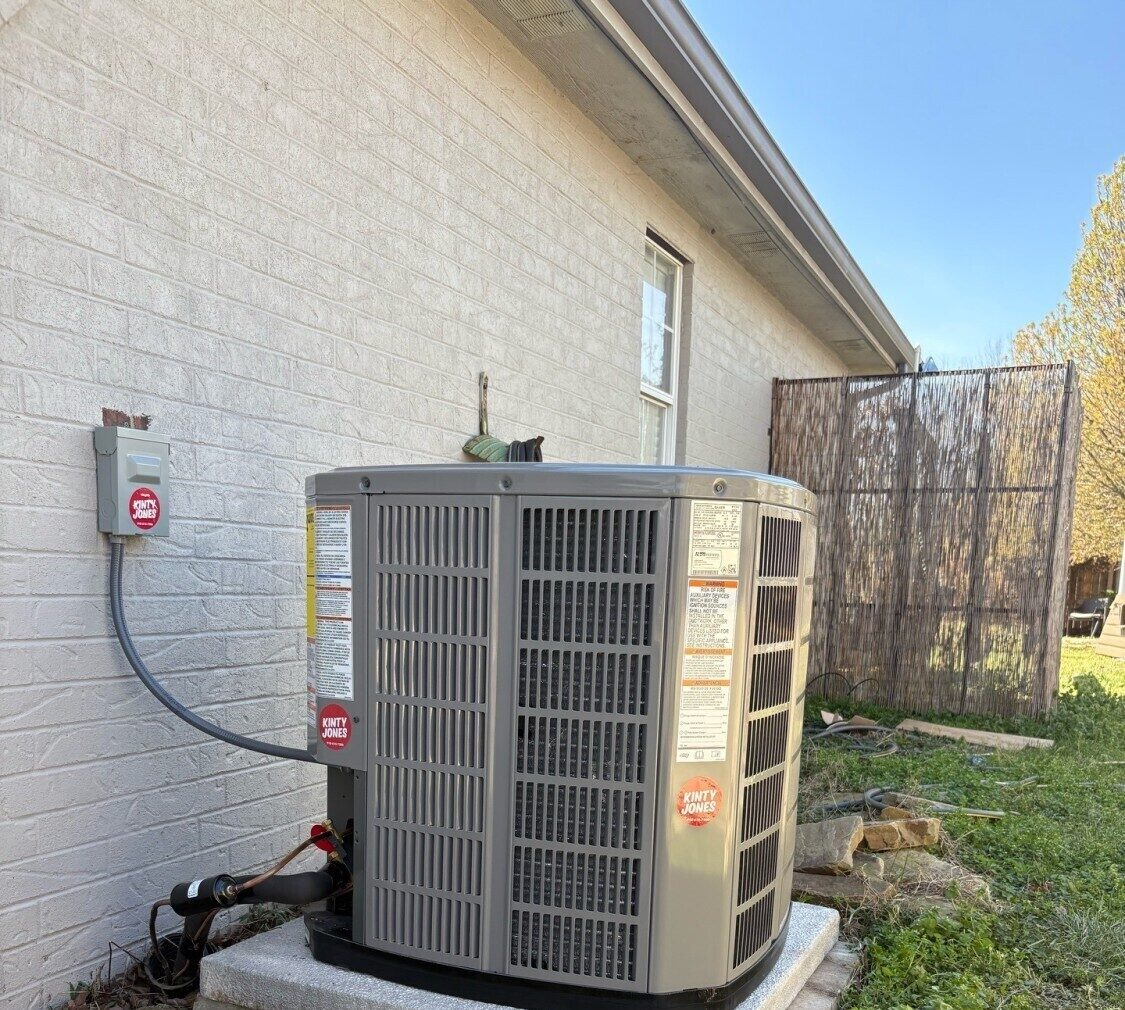
Outside, make sure the condenser unit has at least two feet of clearance on all sides and that the coil fins are not caked with dirt, grass clippings, or cottonwood seeds. A restricted condenser reduces the system’s total cooling output, which magnifies every airflow imbalance inside the house.
Inspect accessible ductwork
If you can safely access your attic or crawlspace, look for obvious duct problems. Check for:
- Disconnected joints where flex duct has pulled away from a collar or boot
- Sections of flex duct that have collapsed, kinked, or sagged between supports
- Visible tears or holes in the duct material
- Duct runs that are lying directly on the attic floor without insulation wrap
Reconnecting a joint, straightening a kink, or resupporting a sagging run can restore airflow to a starving room immediately. For anything beyond basic visual inspection and simple reconnection, a professional duct inspection with pressure testing can map the full system and identify leaks you cannot see.
Long-term improvements that eliminate hot spots for good
Quick fixes address the symptoms. Long-term improvements address the root causes so hot spots do not keep coming back every summer. If your Bella Vista home has persistent uneven cooling that survives filter changes and vent checks, these upgrades are where the real solution lives.
Professional duct sealing and testing
A duct leakage test, also called a duct blaster test, measures exactly how much air your duct system loses and pinpoints where the leaks are concentrated. A technician seals the leaks with mastic or metal tape, and retests to verify the improvement. This is the most direct fix for hot spots caused by duct losses and one of the highest-return HVAC investments a homeowner can make.
Adding or upgrading attic insulation
Bringing attic insulation up to current DOE recommendations for climate zone 4 (R-38 to R-60) is one of the most effective ways to reduce heat gain in rooms below the roofline. If your home was built before the mid-1990s, the existing insulation is almost certainly below current standards. Blown-in cellulose or fiberglass can be added on top of existing insulation without removing it, making this a relatively straightforward upgrade.
Combining insulation with air sealing, addressing the gaps around plumbing stacks, electrical wires, recessed lights, and the tops of interior walls where they meet the attic floor, delivers the best results. According to ENERGY STAR, the combination of air sealing and insulation can save homeowners an average of 15 percent on heating and cooling costs.
Zoning systems and variable-speed equipment
For homes where the hot spots are structural, caused by floor plan layout, window orientation, or multi-story design, a zoning system offers the most precise control. Zoning divides the duct system into independent zones, each with its own thermostat and motorized dampers. The system directs more cooling to zones that need it and less to zones that are already comfortable.
Variable-speed equipment pairs well with zoning because it adjusts output to match demand rather than cycling at full blast. Longer, lower-speed cooling cycles deliver more consistent temperatures and better humidity control across the whole house, which directly addresses the uneven comfort that creates hot spots.
Maintenance memberships that catch problems early
Hot spots rarely appear overnight. They develop as ducts loosen, insulation settles, coils collect grime, and refrigerant charge drifts. A maintenance membership that includes seasonal inspections and tune-ups catches these changes before they become comfort problems. Consistent professional oversight is the difference between a system that delivers even cooling year after year and one that slowly drifts toward the same frustrating hot spots every summer.
Conclusion
A home should feel comfortable from the front door to the back bedroom. If yours does not, the cause is somewhere in the chain between the equipment, the ductwork, the insulation, and the building envelope. Most of the time it is more than one factor working together, and fixing just one piece gets you partway there while leaving the others unaddressed.
Start with the basics: check your filter, open every vent, and inspect what you can see. If the hot spots persist, the problem is deeper, in the ducts you cannot reach, the insulation you cannot see, or the system itself.
Kinty Jones Heating and Cooling can diagnose exactly where your Bella Vista home is losing the battle against uneven cooling and fix it so every room pulls its weight. Reach out to schedule an inspection and start enjoying the whole house this summer, not just the rooms closest to the thermostat.