Finding ice on your air conditioner when it is 90 degrees outside feels like it should not be possible, but it is one of the most common AC problems in Northwest Arkansas. Understanding what causes air conditioners to ice up in Springdale starts with how the cooling cycle works and what goes wrong when the balance between airflow, refrigerant pressure, and temperature tips in the wrong direction.
The ice is not a mystery. It is a symptom, and it always points back to one of a handful of mechanical causes.
Springdale sits in a humid subtropical climate where summer highs regularly reach the upper 80s to low 90s and humidity runs between 72 and 77 percent. Your AC works hard from June through September just to hold a comfortable indoor temperature.
When something restricts airflow or disrupts the refrigerant cycle, the evaporator coil drops below freezing and moisture from the humid indoor air condenses and freezes on the coil surface. The result is a block of ice that shuts down cooling entirely, often at the worst possible moment.
The causes are fixable, but the longer ice stays on the coil, the greater the risk of compressor damage. This article explains exactly why air conditioners freeze up, what each cause looks like, and how to respond when you find frost or ice on your system.
In this article, you will learn about:
- How the evaporator coil freezes when airflow drops too low
- Why refrigerant problems are the most serious cause of icing
- Mechanical and electrical failures that lead to frozen coils
- What to do the moment you notice ice on your system
- How regular maintenance prevents icing before it starts
Keep reading to find out what is happening inside your system, how to stop the damage from spreading, and when a professional repair is the only safe path forward.
How the evaporator coil freezes when airflow drops too low
The evaporator coil inside your air handler is designed to operate at a specific temperature, typically between 35 and 40 degrees Fahrenheit. At that temperature, the coil absorbs heat from the warm indoor air passing over it and the refrigerant inside evaporates. When everything works correctly, the coil stays cold enough to cool the air but warm enough to prevent freezing.
The system depends on a continuous flow of warm air across the coil to maintain that balance. When airflow drops, the coil loses the heat source it needs to stay above freezing. The surface temperature falls below 32 degrees, and moisture in the air starts freezing on the fins and tubing. Once the ice starts forming, it insulates the coil further, which drops the temperature even more and accelerates the freeze. Within a few hours, a thin layer of frost can become a solid block of ice.
A clogged air filter is the most common trigger
A dirty air filter restricts the volume of air that reaches the evaporator coil. The blower motor pushes against the restriction, delivers less air, and the coil starves. This is the single most frequent cause of a frozen AC in Springdale homes, and it is the easiest to prevent.
According to the U.S. Department of Energy, 88 percent of U.S. homes have some form of air conditioning, and the cumulative cost of running these systems reaches roughly 29 billion dollars per year. A significant portion of that cost comes from systems running inefficiently because of neglected filters. In a Springdale summer, where the system runs 12 or more hours a day, a filter that looked fine in May can be fully clogged by mid-July.
Check your filter monthly during cooling season. If you cannot see light through it, replace it immediately and monitor the system for signs of icing over the next 24 hours.
Blocked or closed supply vents
Closing vents in unused rooms or blocking them with furniture seems harmless, but it changes the pressure dynamics inside the entire duct system. When supply vents are closed, the total volume of air moving through the system drops. The evaporator coil receives less warm air, and the same chain reaction that a dirty filter triggers, lower coil temperature, moisture condensation, ice formation, plays out.
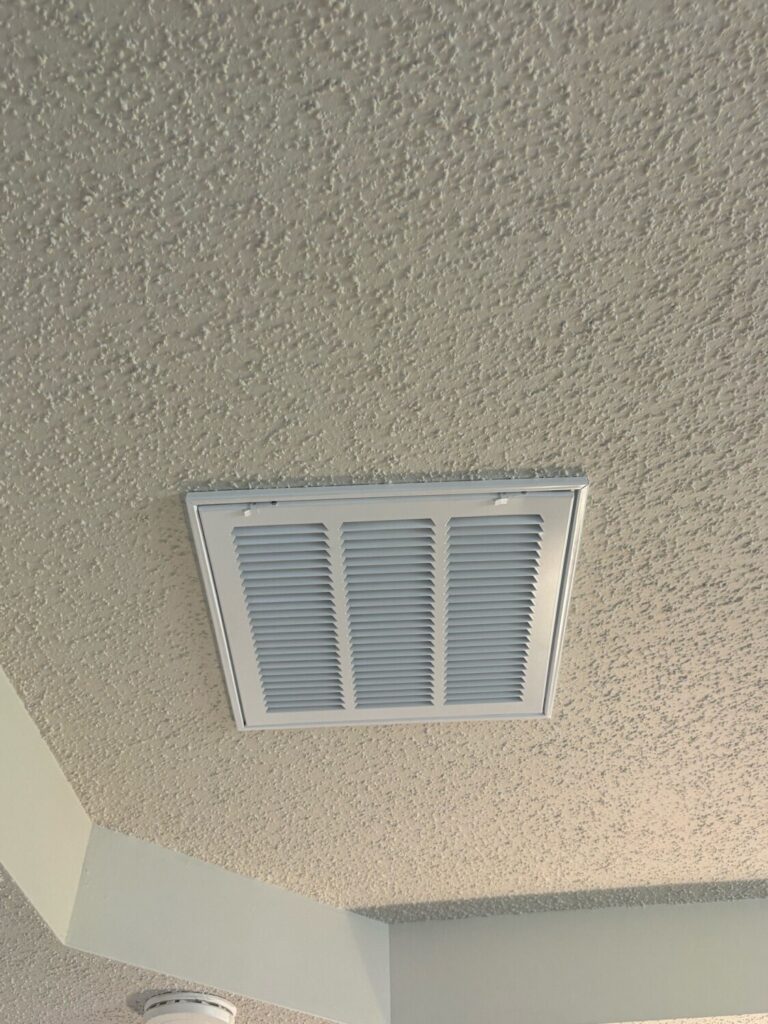
Walk through every room in the house and verify that every supply vent and return grille is open and unobstructed. A single blocked return in a central hallway can reduce system airflow enough to initiate freezing on a humid Springdale afternoon.
A failing blower motor
If the filter is clean and all vents are open but airflow still feels weak, the blower motor itself may be losing speed. A motor with worn bearings, a failing capacitor, or an electrical fault delivers less air than the system requires. The coil does not get enough warm air, and ice begins to form.
A blower motor in decline often gives audible warnings before it fails entirely. Listen for:
- A grinding or scraping sound when the system runs
- A high-pitched whine at startup
- Intermittent drops in airflow that come and go
Any of these paired with visible frost on the refrigerant lines warrants a service call before the motor fails completely and the coil freezes solid.
Why refrigerant problems are the most serious cause of icing
Airflow restrictions are the most common cause of icing, but refrigerant issues are the most dangerous for your equipment. When the refrigerant charge is too low or the system has a leak, the evaporator coil operates at pressures and temperatures it was never designed to sustain. The ice is just the visible symptom. The real damage is happening inside the compressor.
Low refrigerant from a slow leak
Refrigerant does not get used up. In a sealed system, the original charge lasts the life of the equipment. If a technician tells you the system is low on refrigerant, that means there is a leak somewhere in the refrigerant circuit, in the evaporator coil, the condenser coil, the line set, or a fitting.
When refrigerant charge drops, the pressure inside the evaporator coil drops with it. Lower pressure means a lower boiling point for the refrigerant, which means the coil gets colder than its design temperature. The coil drops below freezing, and ice forms. As the leak continues and more refrigerant escapes, the problem accelerates.
Simply adding refrigerant without finding and repairing the leak is a temporary fix that wastes money and delays the inevitable. The leak will continue, the system will ice up again, and the compressor will eventually fail from running under abnormal conditions. A professional AC repair includes locating the leak, repairing it, pressure-testing the repair, and recharging to the manufacturer’s specification.
Overcharged refrigerant
Too much refrigerant is less common than too little but equally problematic. An overcharged system creates abnormally high pressures on the high side of the circuit, which can push liquid refrigerant into the compressor and cause the evaporator coil to operate at unpredictable temperatures. Depending on the degree of overcharge and ambient conditions, the coil can ice over or the compressor can sustain damage from liquid slugging.
Overcharging typically happens during a service call where the technician adds refrigerant without properly measuring the existing charge. This is one reason why choosing a qualified HVAC company matters. The correct charge is determined by manufacturer specifications and verified with temperature and pressure measurements, not estimated by feel.
The refrigerant transition and what it means for older systems
The EPA is phasing down production of hydrofluorocarbon refrigerants under the American Innovation and Manufacturing Act. New residential AC systems manufactured after January 1, 2025 use lower-GWP refrigerants like R-454B instead of R-410A. Existing R-410A systems can still be serviced, but as production allowances decline over the coming years, the cost of R-410A for repairs and recharges is expected to rise.
For homeowners with an older system that has developed a refrigerant leak, this transition adds a financial consideration to the repair-versus-replace decision. Repairing and recharging today is straightforward, but the economics shift as the refrigerant becomes more expensive. A technician can help you weigh the cost of a leak repair against the age and condition of the system.
Mechanical and electrical failures that lead to frozen coils
Beyond airflow and refrigerant, several other mechanical and electrical issues can cause or contribute to coil icing. These are less common than a dirty filter or a slow leak, but they produce the same result and require professional diagnosis.
A malfunctioning thermostatic expansion valve
The thermostatic expansion valve, or TXV, controls how much refrigerant flows into the evaporator coil. When it works correctly, it meters refrigerant precisely to match the cooling demand. When it sticks, fails, or loses its sensing bulb calibration, it can flood the coil with too much refrigerant or starve it, both of which can lead to abnormal coil temperatures and icing.
TXV problems are harder to diagnose than a dirty filter because the symptoms, weak cooling, ice formation, and unusual pressures, overlap with other issues. A technician uses superheat and subcooling measurements to determine whether the valve is performing correctly.
A frozen or clogged condensate drain
Your AC removes moisture from the air every time it runs. That water collects in a drain pan beneath the evaporator coil and flows out through a condensate drain line. If the drain line clogs with algae, mold, or debris, water backs up into the pan and can come into contact with the coil. In some configurations, standing water around the coil base contributes to ice formation by keeping the surrounding surfaces cold and wet.
A clogged drain line is also a common cause of system shutdowns when a safety float switch cuts power to the system to prevent water damage. Flushing the drain line with diluted vinegar or a wet/dry vacuum periodically keeps it clear and prevents both water damage and conditions that encourage icing.
Running the system when outdoor temperatures are too low
This applies more to spring and fall in Springdale than to peak summer, but it is worth noting. Air conditioners are designed to operate within a specific range of outdoor temperatures, typically above 60 degrees Fahrenheit. Running the AC when nighttime temperatures dip into the 50s can push evaporator coil temperatures below freezing even with normal airflow and refrigerant charge.
If you run the AC during a cool Springdale evening in May or September and notice frost the next morning, the outdoor temperature may be the primary factor. Switching to fan-only mode or opening windows on mild nights avoids the issue entirely.
What to do the moment you notice ice on your system
How you respond to a frozen AC matters. The wrong steps can cause more damage. The right ones protect the compressor and speed up the recovery.
Turn the system off immediately
Do not keep running the AC with visible ice on the refrigerant lines, the indoor coil, or the outdoor unit. Running a frozen system forces the compressor to work against abnormal pressures and can cause liquid refrigerant to reach the compressor, a condition called liquid slugging that can destroy the component.
Turn the thermostat to “off” or switch it to “fan only.” Fan-only mode keeps the blower running without the compressor, which circulates room-temperature air over the frozen coil and speeds the thawing process.
Let the system thaw completely
A fully iced coil can take several hours to thaw, depending on how much ice has built up. Do not try to chip, scrape, or heat the ice off the coil. The evaporator fins are thin and delicate, and physical force can bend or puncture them.
While the coil thaws, check the air filter and replace it if it is dirty. Open all supply vents and return grilles. Look for obvious obstructions.
Once the ice is fully melted and the drain pan has emptied, you can try restarting the system. Monitor it closely for the first hour:
- Check for cold air at the supply vents within 15 minutes of startup.
- Feel the large copper refrigerant line at the outdoor unit. It should be cold and sweating, not frosted.
- Listen for unusual sounds from the compressor or blower.
If ice begins forming again, the cause is not the filter or vents. Shut the system down and call for professional AC service.
Know when the problem is beyond a filter change
A single icing event caused by a dirty filter is a wake-up call, not a crisis. Replace the filter, thaw the coil, and resume normal operation. But recurring icing, icing with a clean filter, or icing accompanied by hissing sounds, oil stains near the outdoor unit, or a compressor that struggles to start all point to problems that require a technician with gauges, leak detection equipment, and the training to diagnose refrigerant circuit issues safely.
How regular maintenance prevents icing before it starts
Every cause of AC icing described in this article is preventable with consistent maintenance. A frozen coil is never the first thing that goes wrong. It is always the end result of a condition that built up over time.
Seasonal tune-ups catch the precursors
A professional AC tune-up includes checking refrigerant charge, cleaning the evaporator and condenser coils, testing airflow, verifying electrical connections, flushing the condensate drain, and inspecting the blower motor. Each of these tasks directly addresses one of the icing causes covered above.
According to the U.S. Department of Energy, the difference in energy consumption between a well-maintained cooling system and a severely neglected one can range from 10 to 25 percent. In Springdale, where average summer highs hit 89 degrees and the system runs roughly half the year, that gap affects both your comfort and your utility bill every month.
Filter discipline is the cheapest insurance
A clean filter is the single most effective thing you can do to prevent your AC from icing up. During Springdale’s cooling season, check the filter every 30 days. Replace standard one-inch filters monthly and inspect thicker media filters quarterly. The cost of a filter is negligible compared to the cost of a compressor repair caused by repeated icing events.
A maintenance membership keeps everything on schedule
It is easy to forget a tune-up or let a filter go an extra month. A maintenance membership builds the schedule into your calendar and includes the seasonal inspections that catch small problems before they become frozen coils. For a Springdale home where the AC carries the household through six months of heat, that consistency is not optional. It is the difference between a system that performs reliably all summer and one that freezes up on the day you need it most.
Conclusion
Ice on your air conditioner is your system asking for help. It might be asking for a clean filter, or it might be telling you that refrigerant is leaking, a motor is failing, or a valve is stuck. The answer is always to stop running the system, let it thaw, check the basics, and call for help if the ice comes back.
Springdale summers do not leave room for a system that is struggling. The heat and humidity are relentless, and a frozen coil can take your home from comfortable to miserable in a single afternoon.
If your AC has iced up or you want to make sure it does not, Kinty Jones Heating and Cooling can diagnose the cause, make the repair, and set you up with the maintenance that keeps it from happening again. Reach out today and get your system back on solid ground before the next heat wave rolls through Northwest Arkansas.