When your air conditioner fails during a Springdale summer, the first few hours matter more than you might expect. Emergency AC repair tips for Springdale homeowners are not about fixing the system yourself. They are about protecting your family from heat exposure, preventing additional damage to the equipment, and taking the basic troubleshooting steps that may restore cooling without a service call or give the technician a head start when they arrive.
The CDC advises staying in an air-conditioned location as the primary defense against extreme heat, noting that more than 700 people die from heat-related causes every year in the United States. When your home loses its primary cooling source during a 95-degree Springdale afternoon, the indoor temperature can climb into dangerous territory within a few hours, especially for older adults, young children, and anyone with chronic health conditions.
Knowing what to do in that gap between breakdown and repair can prevent a bad situation from becoming a dangerous one and may save you money by avoiding damage that the wrong response would have caused.
In this article, you will learn about:
- The immediate safety steps to take when your AC stops working
- Simple troubleshooting checks that can restore cooling without a technician
- How to keep your home as cool as possible while you wait for help
- What to do and what not to do to protect the equipment from further damage
- How to prepare so the next breakdown is less disruptive
Keep reading to learn how to handle an AC emergency calmly, safely, and effectively while the professionals are on their way.
Immediate safety steps when your AC stops working
The first priority when your cooling system fails is not the equipment. It is the people inside the house. In Springdale’s summer heat, an indoor environment without air conditioning can become uncomfortable within an hour and potentially dangerous within a few hours, depending on the outdoor temperature, the insulation of the home, and the health of the occupants.
Taking safety steps first and troubleshooting second is the correct order of operations.
Assess the heat risk for everyone in the house
Not everyone responds to heat the same way. Before you start checking breakers and filters, take 30 seconds to evaluate who is in the home and whether anyone is at elevated risk.
People most vulnerable to heat exposure:
- Adults over 65, who may have reduced ability to regulate body temperature
- Children under 5, who heat up faster than adults and cannot always communicate distress
- Anyone with chronic heart, lung, or kidney conditions
- Anyone taking medications that affect sweating or heat regulation, including diuretics, beta-blockers, and some psychiatric medications
- Pets, especially dogs and cats, who cannot cool themselves as efficiently as humans
If anyone in the household falls into a high-risk category and the indoor temperature has already climbed above 85 degrees, relocating to a cooled environment is the right first move. Your emergency AC situation can wait for troubleshooting. Heat illness cannot.
The CDC notes that fans alone will not prevent heat-related illness when temperatures exceed the mid-90s. If the house is already that hot and no AC is available, leaving is safer than staying.
Move vulnerable people and pets to the coolest part of the house
If the indoor temperature is still manageable but rising, move everyone to the coolest area of the home while you troubleshoot. In most Springdale homes, the lowest level of the house, a basement or ground floor, stays cooler because heat rises.
Immediate cooling strategies while the AC is down:
- Close all blinds and curtains, especially on south-facing and west-facing windows, to block solar heat gain
- Open windows on the shaded side of the house if the outdoor temperature is below the current indoor temperature
- Run ceiling fans and portable fans to create air movement across skin, which helps with evaporative cooling
- Place a bowl of ice or a wet towel in front of a fan to create a rudimentary cool breeze
- Hydrate everyone with cool water, avoiding caffeine and alcohol, which can accelerate dehydration
These steps buy you time. They will not replace air conditioning, but they can keep the indoor environment tolerable while you work through the troubleshooting checklist.
Simple troubleshooting checks that can restore cooling without a technician
A surprising number of AC “emergencies” have simple causes that a homeowner can identify and resolve in minutes. Before calling for service, work through these checks in order. If any of them restores cooling, you have saved yourself the cost and wait time of a service call.
Even if none of them fix the problem, the information you gather will help the technician diagnose the issue faster when they arrive.
Check the thermostat settings and batteries
This sounds obvious, but it resolves a meaningful percentage of no-cooling calls. Verify that the thermostat is set to “cool” mode, not “off,” “heat,” or “fan only.” Confirm the set temperature is below the current room temperature. Check that the fan is set to “auto” rather than “on.”
If the thermostat has a blank screen, the batteries may be dead. Replace them with fresh batteries and see if the system restarts. Some thermostat issues that look like AC failures are actually display or communication problems that a battery swap resolves.
If the thermostat is set correctly and powered but the system still does not respond, move to the next check.
Check and reset the circuit breakers
Your HVAC system uses at least two breakers: one for the indoor air handler or furnace blower, and one for the outdoor condenser unit. Either breaker can trip due to a power surge, a momentary overload, or a lightning strike during a Springdale thunderstorm.
How to check and reset:
- Locate your electrical panel and find the breakers labeled for the air handler and the outdoor AC unit
- If either breaker is in the middle position (tripped), flip it fully to “off” and then back to “on”
- Wait five minutes before turning the thermostat back to cooling mode, because the compressor needs a brief delay before restarting to equalize pressure
If the breaker trips again immediately after being reset, do not keep resetting it. A breaker that trips repeatedly is protecting the circuit from an electrical fault, and forcing it back on risks fire or equipment damage. This is a call-for-service situation.
Check the air filter
A severely clogged filter can cause the system to overheat and shut off on a safety limit, or it can freeze the evaporator coil solid, blocking all cooling. Pull the filter out and inspect it.
If the filter is visibly clogged:
- Replace it with a clean filter of the same size and MERV rating
- If you do not have a replacement on hand, running the system briefly without a filter is better than running it with a completely blocked one, but only as a temporary measure until you can get a new filter
- If the coil appears frozen, switch to fan-only mode and let the ice thaw completely before restarting the cooling, which can take two to four hours
A dirty filter is the single most common cause of AC system failures that look like emergencies but have a $5 fix. Check the filter every time, even if you changed it recently.
Check the outdoor unit
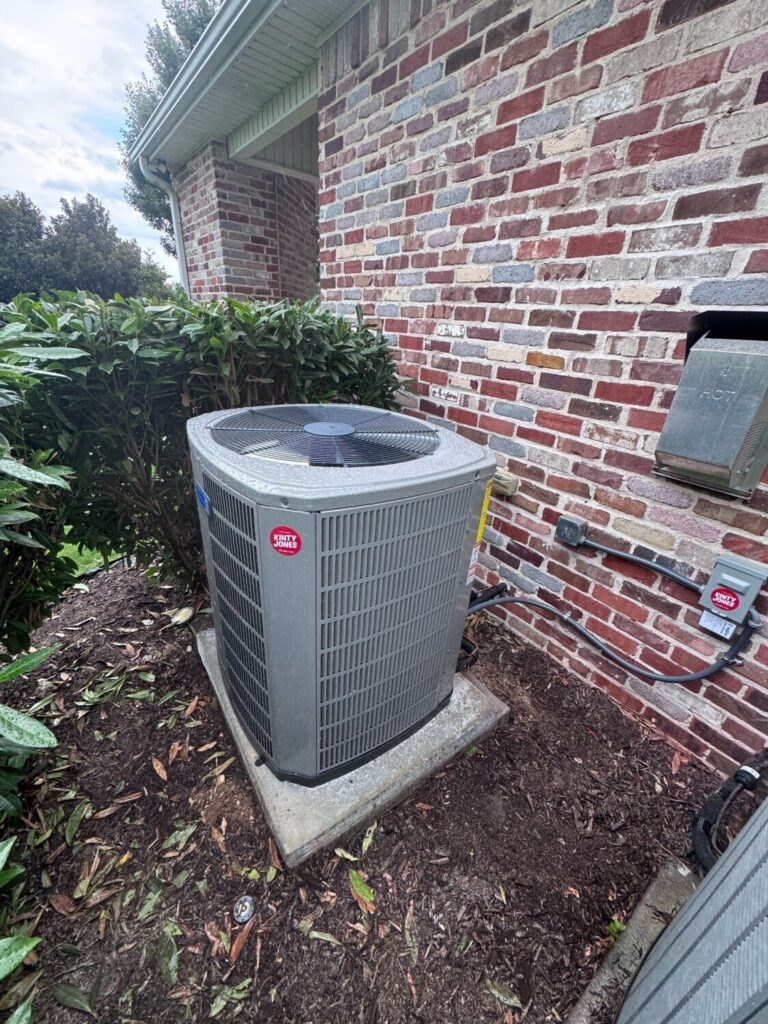
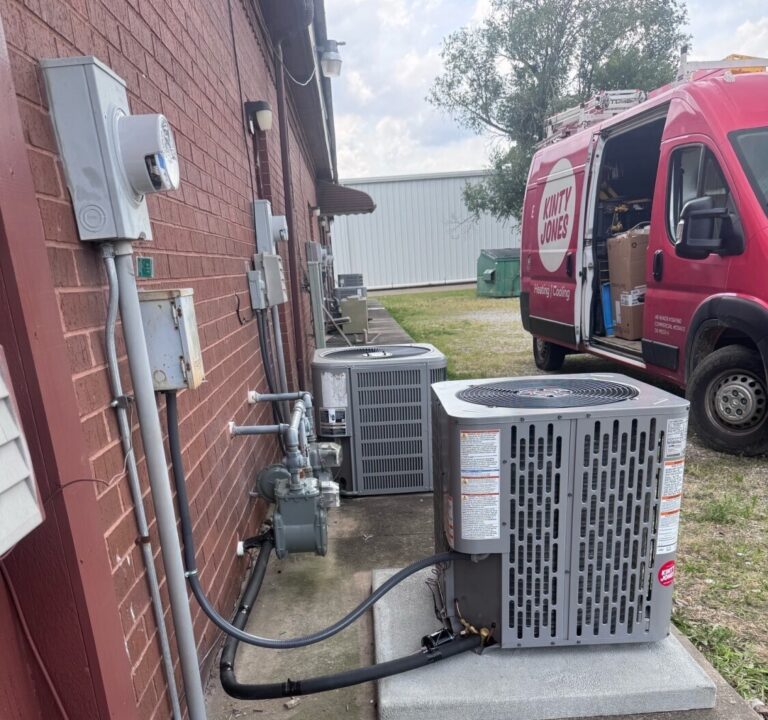
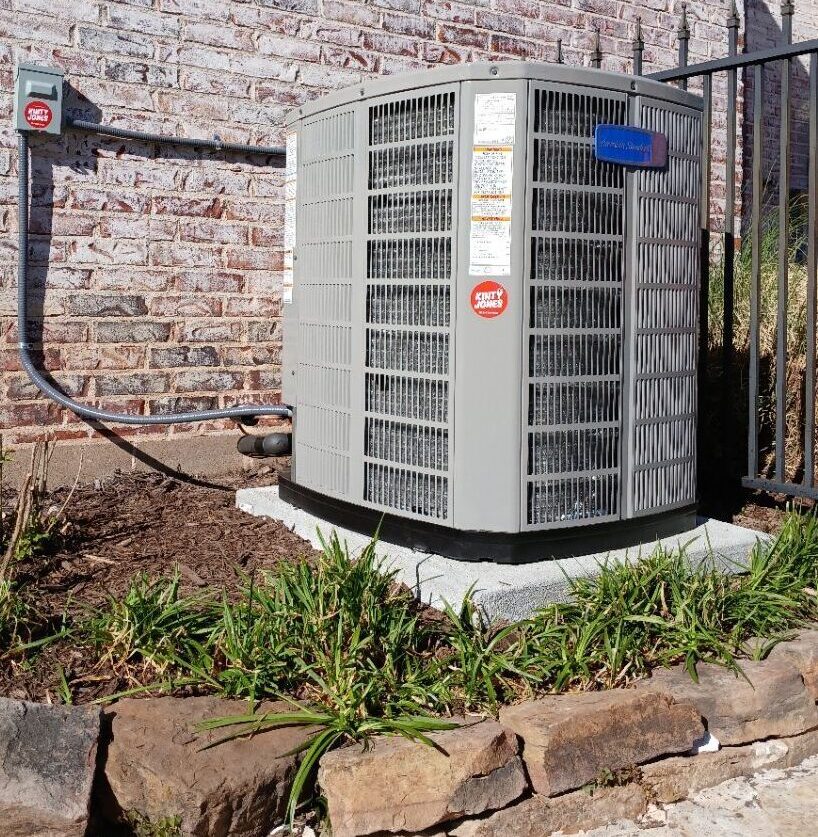
Walk outside and look at the condenser unit. Verify that it is running. If the indoor blower is on but the outdoor unit is silent, the problem is likely a tripped breaker (check the disconnect box mounted near the outdoor unit), a failed capacitor, or a failed contactor.
While at the outdoor unit, check for:
- Debris, leaves, or vegetation blocking the condenser fins
- The disconnect box near the unit, which has its own switch or pullout that may have been inadvertently turned off
- Ice on the refrigerant lines at the unit, which indicates a freeze-up that started at the indoor coil
If the outdoor unit is running but the air from the supply vents inside is warm, the system may be low on refrigerant or the compressor may have failed. These are professional-level issues that require a technician with diagnostic tools and refrigerant handling certification.
How to keep your home as cool as possible while you wait
Once you have confirmed that the problem is beyond homeowner troubleshooting and a service call is scheduled, the focus shifts to minimizing heat gain inside the home and managing comfort until the technician arrives. In Springdale, where summer service wait times can stretch to 24 to 48 hours during peak demand, these strategies can make the difference between a tolerable wait and a miserable one.
Reduce heat gain aggressively
Every source of heat inside the home adds to the thermal load that your non-functioning AC would normally manage. Eliminating as much of that heat as possible slows the rate at which the indoor temperature climbs.
Priority heat-reduction steps:
- Close every blind, curtain, and shade in the house, especially on windows that receive direct sun
- Do not use the oven, stove, or dishwasher until the AC is repaired
- Switch to cold meals, microwave, or an outdoor grill for cooking
- Turn off unnecessary lights, especially any remaining incandescent bulbs, which generate significant heat and affect air quality when the system is not circulating
- Unplug electronics and appliances that generate heat when idle, including desktop computers and gaming consoles
- Run the clothes dryer only if absolutely necessary, and preferably at night
Each of these steps is small on its own, but collectively they can slow the indoor temperature rise by several degrees over the course of an afternoon.
Use fans strategically to maximize evaporative cooling
Ceiling fans and portable fans do not lower the air temperature. They create air movement across your skin that accelerates evaporative cooling, which makes the room feel three to four degrees cooler than the actual air temperature.
Fan strategies that help:
- Set ceiling fans to counterclockwise rotation so they push air downward
- Position portable fans to create cross-ventilation through open windows on the shaded side of the house, but only if outdoor air is cooler than indoor air
- Place a shallow pan of ice or frozen water bottles in front of a fan for a temporary cool-air effect
- Turn fans off in unoccupied rooms, because fans cool people, not spaces
Remember that the CDC advises against relying on fans alone when indoor temperatures exceed 90 degrees. At that point, the fan can actually increase body temperature by blowing hot air across the skin. If the house reaches 90 degrees and you have no alternative cooling source, it is time to relocate to a cooled environment.
Concentrate your living space into one or two rooms
If you have a portable or window AC unit, move it to the room where the family will spend most of their time. Close the doors to the rest of the house and focus your available cooling resources on a smaller space.
Even without a portable unit, concentrating everyone into a ground-floor room with closed blinds and a fan running is more effective than trying to keep the whole house tolerable. A smaller space with less window exposure and less vertical distance from the ground will stay cooler longer.
If a neighbor or family member nearby has working AC, spending the hottest hours of the day at their home is a perfectly reasonable option, especially if you have young children or elderly family members.
What to do and what not to do to protect the equipment
Your actions during an AC emergency can either protect the system or make the problem worse. Some common instincts, like repeatedly trying to restart the system or cranking the thermostat to 60 degrees, can cause additional damage that turns a moderate repair into an expensive one.
Do not keep restarting a system that will not stay running
If the system starts briefly and then shuts off, or if the breaker trips again after being reset, the system is protecting itself through a safety mechanism. These are warning signs that the problem requires professional attention. Overriding that protection by repeatedly forcing restarts stresses the compressor, can damage electrical components, and in the case of a tripped breaker, can create a fire risk.
If one restart attempt does not resolve the issue, leave the system off and call for service.
Do not set the thermostat to an extreme temperature hoping it will cool faster
Setting the thermostat to 60 degrees will not make the system cool faster. The system operates at the same capacity regardless of how far below the current temperature you set the target. All you accomplish is ensuring the system runs nonstop once it is repaired, which can trigger a freeze-up if other conditions are present.
Set the thermostat to a reasonable cooling target, 76 to 78 degrees, and let the system do its work when it comes back online.
Do keep the condensate drain area clear
If your system shut down because of a clogged condensate drain, water may be pooling around the air handler. Place towels or a shallow pan to catch the water and prevent damage to floors, drywall, or ceilings below the unit.
Do not attempt to clear the drain yourself unless you are comfortable locating the drain line and using a wet-dry vacuum on the exterior end. An incorrect attempt can push debris further into the line and make the clog worse. A technician will clear the drain as part of the repair visit.
Do write down what happened
Before the technician arrives, note what you observed:
- What time the system stopped working
- What you heard or did not hear when the system was running, any unusual noises, clicking, humming without the compressor engaging, or silence
- Whether the indoor blower was running or not
- Whether the outdoor unit was running or not
- What the thermostat was displaying
- What troubleshooting steps you already tried and what happened
This information saves the technician diagnostic time and helps them zero in on the likely cause faster. A clear account of what happened is more valuable than any DIY repair attempt.
How to prepare so the next breakdown is less disruptive
An AC emergency is stressful precisely because it is unexpected. The best way to reduce the impact of a future breakdown is to take steps now that make the next one less likely, less severe, and easier to manage if it does happen.
Schedule seasonal maintenance before the cooling season starts
The majority of mid-summer AC failures are caused by problems that were detectable and preventable during a spring tune-up. Weak capacitors, low refrigerant, dirty coils, and worn electrical connections are all caught during a standard pre-season inspection.
A system that enters summer after a professional AC inspection and tune-up is dramatically less likely to fail during peak demand than one running on deferred maintenance.
Keep a six-pack of filters and a basic emergency kit on hand
Stock the supplies that make an AC emergency manageable. The same preparedness mindset applies to heating season as well:
- Six months’ worth of replacement air filters for your system
- Fresh batteries for the thermostat
- A flashlight for inspecting the air handler and breaker panel
- Towels for catching condensate overflow
- A portable or window AC unit stored and ready to deploy as backup cooling
The cost of these supplies is trivial compared to the comfort and safety they provide when the system goes down unexpectedly.
Invest in a maintenance membership for priority access
During peak summer in Springdale, every HVAC company in the area is running a full board. Homeowners without a service relationship may wait two to three days for a technician. A maintenance membership typically includes priority scheduling, which means shorter wait times when an emergency does occur.
That priority access is the single most valuable benefit during a breakdown. Getting a technician 24 to 48 hours sooner can mean the difference between a manageable inconvenience and a genuine safety concern, especially during the most extreme heat of the Springdale summer.
The long-term value of a membership extends beyond emergency access. The scheduled tune-ups prevent the majority of breakdowns, the discounted rates reduce repair costs, and the ongoing relationship means a technician who knows your system and can diagnose problems faster.
Conclusion
An AC emergency during a Springdale summer is not the time for panic. It is the time for a calm, methodical response that prioritizes the safety of the people in the house, takes the basic troubleshooting steps that might restore cooling, and protects the equipment from further damage while professional help is on the way.
Check the thermostat, reset the breakers, replace the filter, and look at the outdoor unit. If none of those steps restore cooling, call for service, reduce indoor heat gain, and manage comfort with fans and common sense until the technician arrives. And once the system is repaired, invest in the maintenance and preparation that makes the next breakdown less likely and less disruptive.
If your system has failed and you need help now, or if you want to make sure it does not fail this summer, Kinty Jones Heating and Cooling serves Springdale and Northwest Arkansas homes with fast, honest service and the kind of thorough diagnostic work that finds the real problem and fixes it right.