Your furnace picked the coldest week of the year to start making that noise, and now you’re staring at three quotes that don’t agree on much of anything. One contractor says $3,500. Another says $9,000. You’re left wondering if someone’s overcharging you or someone else is cutting corners, the same confusion that comes up whenever a local HVAC repair call turns into a replacement conversation.
Both numbers can be true at the same time. Furnace replacement cost in Bentonville, Rogers, Fayetteville, Springdale, or Bella Vista depends on the size of your home, the efficiency tier you choose, and what your ductwork and venting actually need to support the new unit. National averages blend together climate zones that have nothing to do with a Northwest Arkansas winter.
This guide breaks down what a furnace replacement really costs in this market, what pushes the price in either direction, and how to tell a fair quote from a guess dressed up as one.
In this article, you will learn about:
- What actually drives furnace replacement cost
- Real price ranges by furnace type and efficiency tier
- How to evaluate a quote before you sign anything
- Ways to lower your total cost without sacrificing quality
Keep reading to walk into your next quote already knowing what questions separate a fair price from a shortcut.
What actually drives the cost of a furnace replacement
A furnace quote isn’t one number, it’s several numbers stacked together: the unit itself, the labor to remove the old system and install the new one, any ductwork or venting changes, and permitting. Skip any one of those steps and the number on the page stops meaning much.
Homeowners often assume the furnace itself is most of the bill. In practice, labor, venting work, and any ductwork corrections frequently account for a substantial share of the total, especially on older homes where the original system wasn’t built around a modern high-efficiency furnace.
Home size and the BTU output you actually need
BTU output measures how much heat a furnace can generate per hour, and it needs to match your home’s actual heat loss, not just its square footage. A 1,600 square foot home in Springdale and a 3,000 square foot home in Fayetteville are not the same job, and pricing scales with output capacity.
An undersized furnace runs nonstop and still can’t keep the house warm on the coldest January mornings, the kind of persistent hot spots and cold spots problem that a properly sized system shouldn’t have. An oversized one short-cycles, turning on and off too fast to ever reach steady, even heat, which wastes energy and wears out components early.
A Manual J load calculation, not a square-footage rule of thumb, is what determines the right output size. That calculation factors in insulation levels, window count, ceiling height, and local climate data.
- Homes under 1,500 square feet typically need 40,000 to 60,000 BTUs
- Homes between 1,500 and 2,500 square feet often land in the 60,000 to 80,000 BTU range
- Larger homes above 2,500 square feet may need 80,000 to 100,000 BTUs or more
Getting this number wrong costs you twice: once on the installation itself, and again every month on a gas bill that never quite matches what the sales pitch promised.
Why two-stage and modulating furnaces change the equation
A single-stage furnace runs at full blast or not at all, while variable speed two-stage and modulating models adjust their output to match the actual heat loss in real time. That flexibility costs more upfront but often narrows the temperature swings between rooms that single-stage systems are known for.
Furnace type and efficiency tier
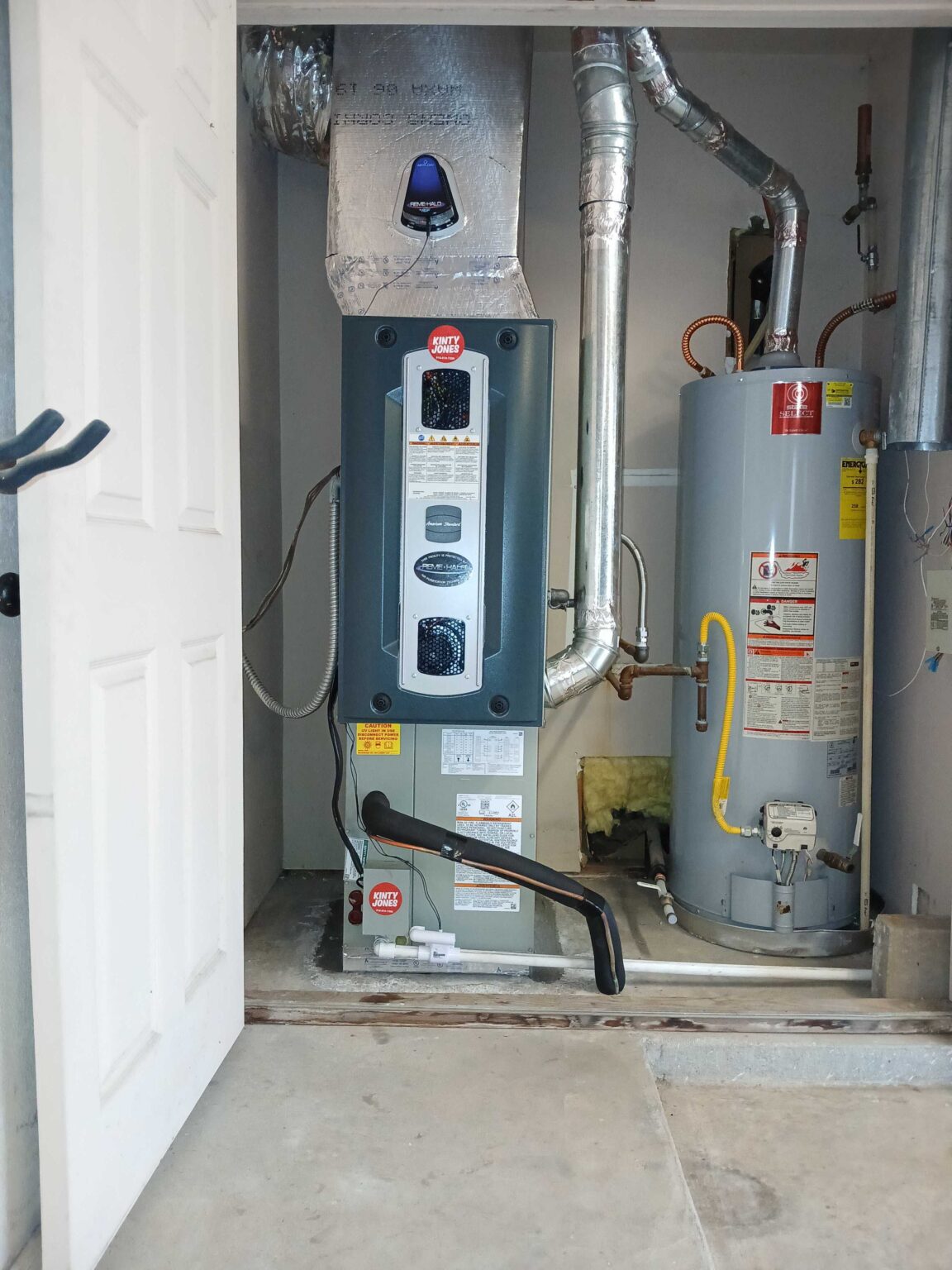
Not every furnace replacement looks the same, and the efficiency tier you choose affects the price more than almost anything else. Standard-efficiency furnaces, generally in the 80 percent AFUE range, cost less upfront and work fine in homes where venting through an existing chimney or flue is already in place.
High-efficiency condensing furnaces, rated 90 percent AFUE or higher, cost more to install because they require different venting, typically PVC pipe run to an exterior wall rather than a traditional flue. According to the U.S. Department of Energy, condensing furnaces recover additional heat from exhaust gases that a standard furnace simply vents outside, which is what allows the higher efficiency rating in the first place.
- Standard-efficiency furnaces: lower upfront cost, simpler venting, higher long-term fuel cost
- High-efficiency condensing furnaces: higher upfront cost, different venting requirements, lower monthly bills
- Two-stage or modulating models: added heating installation cost at the outset, offset by comfort and efficiency over time
Homeowners replacing an older 70 to 80 percent AFUE furnace with a modern condensing model often see the most dramatic drop in monthly heating costs, since older units waste a meaningful share of every dollar of fuel as exhaust heat.
Ductwork, venting, and electrical readiness
If your ductwork was sized for an older, less efficient furnace, it may not distribute air the way a modern system is designed to. Leaky or undersized ducts force the furnace to run longer to reach the same comfort level, which erodes any efficiency gain the new equipment was supposed to deliver.
Switching from a standard-efficiency furnace to a high-efficiency condensing model also means new venting has to be run, since the two systems vent completely differently. Older Rogers and Bella Vista homes without an existing option for that new vent path sometimes need additional HVAC ventilation work to route it correctly.
- A technician inspects existing ductwork for leaks, damage, and sizing
- Venting requirements are assessed against the specific efficiency tier being installed
- Any needed duct sealing, resizing, or venting work is priced as its own line item
A quote that skips this inspection is one to view carefully, since venting and ductwork problems are exactly the kind of thing that turns a same-day furnace install into a multi-day project with an unplanned change order, the same risk that applies to a rushed AC installation in warmer months.
What you can expect to actually pay in Northwest Arkansas
Enough about the variables, here’s what they translate to in real dollars. What follows is grounded in the categories that actually apply to a Northwest Arkansas furnace replacement, not a blended national figure that assumes a different climate and a different housing stock.
According to the U.S. Energy Information Administration, space heating accounts for roughly 40 percent of the energy delivered to the average U.S. household, and natural gas furnaces account for close to half of that figure, which is a large part of why the efficiency tier you choose has such a direct effect on your monthly bill.
Standard-efficiency furnaces
A standard-efficiency furnace in the 80 percent AFUE range, replacing a similar unit with existing venting still usable, is typically the most straightforward and most affordable path. This is where most like-for-like replacements in this market land.
- Straightforward swap-outs with usable venting sit at the lower end of the market
- Adding a smart thermostat or zoning moves the price up incrementally
- Homes needing duct repair or resizing see the largest jump from this baseline
Because this category assumes your existing infrastructure does most of the work already, these jobs tend to move faster and price more predictably across multiple quotes, similar to a standard heating repair call where nothing unexpected turns up once the technician is on site.
High-efficiency condensing furnaces
Condensing furnaces cost more upfront because of the venting change and the added heat exchanger, but the fuel savings show up every single month the system runs, which in this climate is most of the year. The U.S. Department of Energy has finalized new federal efficiency standards requiring nonweatherized gas furnaces to reach a 95 percent AFUE rating by late 2028, a change expected to save U.S. households a combined $1.5 billion annually in utility costs once fully in effect.
- Higher AFUE ratings mean less fuel wasted as exhaust heat
- New venting requirements add cost but are a one-time expense
- Homes planning to stay put for the long haul recoup the premium fastest
Homeowners who plan to be in their home for at least five to seven more years typically see the condensing furnace premium pay for itself, the same preventive tune up logic that applies to any high-efficiency HVAC investment, well before that window closes.
Two-stage and modulating furnaces
Two-stage and modulating furnaces sit at the top of the price range because of the added components that let them adjust output instead of just cycling on and off. The comfort difference is real, especially in homes with rooms that run noticeably colder than the rest of the house.
The premium isn’t only about comfort, it also reduces the wear that comes from constant full-blast cycling, which can extend the practical lifespan of the equipment.
How to know if a quote is fair, low, or a red flag
Once you have a number in hand, the harder question is what to do with it. A quote that’s dramatically lower than the others isn’t automatically the best deal, and a higher one isn’t automatically padded.
The clearest predictor of a bad outcome isn’t the price on the page, it’s what the price leaves out. A contractor who skips the load calculation, doesn’t mention venting requirements, or never inspects your attic or crawlspace is pricing blind, no different from a rushed AC system inspection that skips the diagnostic steps that actually matter.
Questions that separate a real quote from a guess
Before comparing dollar figures, compare what each contractor actually did to arrive at that number. This matters more than the total itself.
- Did they perform a Manual J load calculation, or estimate BTU output from square footage alone?
- Did they physically inspect the existing ductwork, venting, and electrical setup?
- Does the quote itemize equipment, labor, and any venting or duct work separately?
- Is the specific model number and AFUE rating listed, or just a general capacity range?
A contractor who rushes past these questions to get to the number is giving you less to work with than you need for a real comparison, the same gap that shows up when an emergency AC call gets priced over the phone without anyone actually seeing the equipment.
Reading between the lines on a low bid
A bid noticeably lower than the others in Fayetteville or Rogers isn’t automatically a scam, but it deserves a second look before you sign. Sometimes it reflects a genuinely efficient operation. Other times it reflects a furnace that’s undersized for the home or a lower-tier unit swapped in without disclosure.
- Ask what specific model is being quoted, then verify its actual retail price
- Confirm whether permits and inspections are included or billed separately later
- Check whether the warranty terms match what the other quotes are offering
If a contractor can’t explain why their number is lower once you ask directly, that gap usually surfaces again later, just in a less convenient form, not unlike a warning sign that gets ignored until the system fails outright.
Comparing multiple quotes the right way
Three quotes only help if they’re pricing the same scope of work. A bare-bones swap and a job that includes venting changes, duct sealing, and a smart thermostat are not the same project, even if both get labeled “furnace replacement.”
Line up each quote side by side before deciding on price alone. Look past the bottom-line number to what’s actually included in it.
- Confirm all quotes are based on the same BTU output and efficiency tier
- Ask each contractor to itemize labor, equipment, and any venting or duct work separately
- Compare warranty length and what it actually covers, not just that one exists
A quote that looks like an outlier once you line up scope and warranty terms usually tells you more about what got left out than what got saved.
How to lower your total cost without cutting corners
Getting the price down doesn’t have to mean settling for a worse system. There are legitimate ways to reduce what you pay, and most of them come down to timing, documentation, and bundling rather than compromise.
Timing your installation around demand
Heating contractors in this region see predictable seasonal surges, and pricing along with scheduling availability both tighten during those windows. Scheduling outside peak demand can mean faster installation and, sometimes, better labor pricing.
- Late fall and early winter are peak season for furnace tune ups and emergency replacements
- Late spring and summer tend to have more contractor availability
- Planning a replacement before the old system fails entirely gives you room to compare quotes calmly
A homeowner replacing a furnace that’s limping along, rather than one that’s already dead in the middle of a cold snap, has real leverage to shop multiple contractors and negotiate timing, the same ac replacement versus repair decision that comes up on almost every aging system.
Rebates, tax credits, and utility programs
Stacking incentives is where the real savings live, more than negotiating the sticker price down. According to ENERGY STAR, qualifying high-efficiency furnace and home improvement upgrades have historically been eligible for federal tax credits, and local electric cooperatives and utilities in Northwest Arkansas periodically run their own rebate programs on top of anything available federally.
- Ask your installer directly which current rebates apply to the specific equipment they’re quoting
- Keep every itemized invoice, AFUE documentation, and equipment nameplate photo for your records
- File any applicable tax credit paperwork with your tax return for the year the system was placed in service
Documentation is what separates a homeowner who actually collects the rebate from one who technically qualified but never followed through on the paperwork.
Bundling improvements that pay for themselves
A furnace doesn’t operate in isolation. If your attic insulation is thin or your ductwork leaks conditioned air into an unconditioned space, the new furnace has to work harder to hit the same comfort level, which erodes the efficiency gain you paid extra for. This is the same humidity and comfort balance issue that shows up anywhere a home’s envelope is leaking air it already paid to condition.
Addressing insulation or duct sealing at the same time as the furnace replacement, rather than as a separate future project, often costs less combined than tackling them as two isolated jobs months apart. It also means the heating system you just paid for actually performs the way its rating promises from day one.
Conclusion
Furnace replacement cost in Northwest Arkansas isn’t a single number, and any contractor who quotes you one without walking through your home first is skipping steps that matter. The real price depends on your square footage, your existing venting and ductwork, the efficiency tier you choose, and how well your home holds onto the heat once it’s inside.
What separates a smooth installation from a headache isn’t the cheapest bid, it’s a contractor who prices based on an actual load calculation and a real look at your home, not a number pulled from a phone call. That difference shows up on your gas bill every month for years after the crew leaves.
If you’re weighing a furnace replacement in Bentonville, Rogers, Fayetteville, Springdale, or Bella Vista, KJHC can walk your home, run the numbers, and give you a quote that actually reflects what your house needs. Request a service today and get a straight answer before you commit to anything.