Ductwork replacement cost in Northwest Arkansas can range from a modest project for a few accessible runs to a major investment for a large, hard-to-reach, or fully redesigned system. In Rogers, Bentonville, Springdale, and Fayetteville, the price only becomes useful once it is tied to a clear scope.
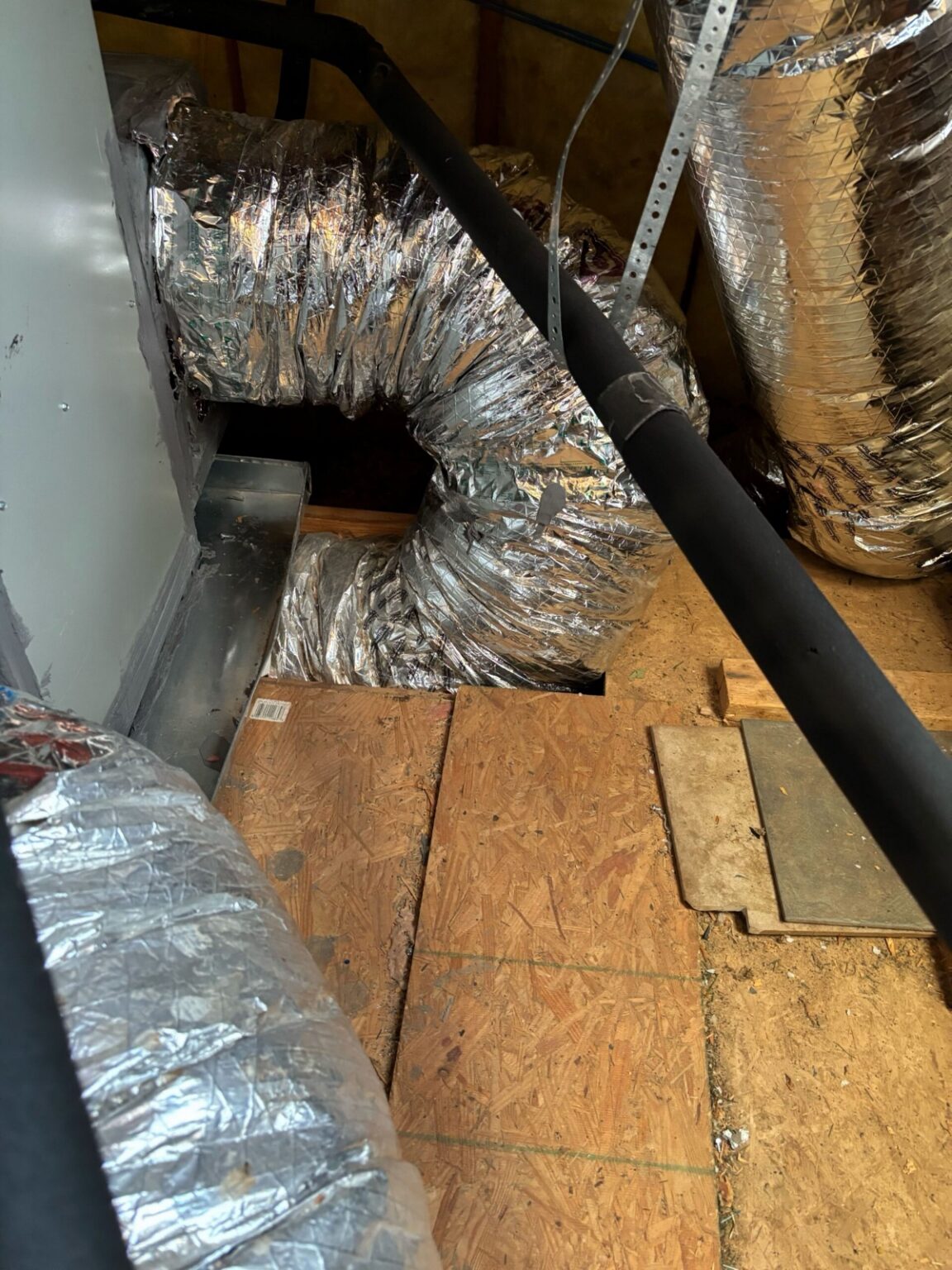
That range is wide because ductwork is not a single appliance sitting in plain view. It is a custom air-delivery network tucked into attics, crawlspaces, ceilings, and walls. The number of runs matters, but so do access, materials, insulation, design work, removal, sealing, and testing.
The most useful estimate is built around your home and your HVAC equipment. KJHC provides ductwork installation and repair across Northwest Arkansas, from targeted corrections to complete replacement when the existing system cannot be rescued sensibly.
What should you budget for ductwork replacement?
There is no honest flat rate for a whole-house duct replacement. A compact single-story home with open attic access is a different job from a multilevel home with tight chases, long runs, and finished surfaces in the way. Treat the first figure you see as a budgeting reference, and expect the final price to follow an inspection, measurements, and a written scope.
National planning figures
The Consortium for Energy Efficiency’s duct retrofit decision guide places national duct replacement costs at $1,450 to $8,000 and notes that complex projects can exceed $12,000. The same guide estimates attic work at $1,450 to $4,650 per 100 linear feet and crawlspace work at $2,200 to $6,000 per 100 linear feet.
Those are national guardrails, not a Northwest Arkansas price or a KJHC quote. They show why two reasonable estimates can be thousands of dollars apart when one home offers easy access and another turns every connection into a wrestling match with a joist.
Partial replacement costs less than rebuilding the network
If one flexible branch is crushed or a short section has disconnected, replacing that piece may solve the problem. Whole-house replacement costs more because it can include supply trunks, returns, branches, plenums, transitions, boots, registers, insulation, supports, and removal of the old materials. “Replace ductwork” can mean three damaged runs in one proposal and every component in another, so the total alone does not tell you which estimate offers more value.
Which details move the final price?
Most price differences come from the amount of work, how hard it is to reach, and how much redesign is needed. A good contractor should connect each price driver to something visible, measured, or designed.
- System size and layout. More rooms, levels, and longer trunks mean more material and labor. The new layout should not simply copy an old design that was undersized or short on returns.
- Access. Low crawlspaces, steep attics, buried ducts, and runs above finished ceilings slow the work. A ranch home in Rogers with a reachable attic is a different job from a two-story Bentonville home with tight chases.
- Materials and insulation. Flexible duct, rigid metal, and duct board have different costs. Ducts in unconditioned attics and crawlspaces need proper insulation and vapor protection.
- Sealing and testing. ENERGY STAR reports that a typical home can lose 20% to 30% of the air moving through its ducts through leaks and poor connections. New ducts should be sealed with approved materials and verified.
Homeowners already dealing with hot spots in Bella Vista or similar comfort gaps elsewhere in Northwest Arkansas should make sure a replacement fixes distribution, not just leakage.
When is replacement smarter than another repair?
Repair is often the practical answer when damage is isolated and the rest of the system is correctly sized, reachable, and sound. A disconnected joint, torn flexible run, or loose boot can usually be fixed without replacing the whole network. The U.S. Department of Energy’s Building Science Education program says a properly sealed system can reduce utility bills by up to 20%.
Replacement makes more sense when repairs keep multiplying or the original design is the problem. Signs that deserve a full evaluation include:
- Multiple crushed, torn, rusted, or disconnected sections
- Hot and cold rooms that persist after equipment problems are ruled out
- Loud airflow or weak delivery at several registers
- Widespread insulation damage or contamination that cannot be corrected safely
Weak airflow can also come from a dirty filter, blower problem, or frozen coil, so a careful low-airflow diagnosis should come before anyone starts removing material. Cleaning is a separate decision too: duct cleaning can address debris, but it cannot fix crushed or undersized ducts.
New equipment is a natural decision point. If a heat pump or furnace replacement is on the table, compare the duct scope alongside the heat pump installation cost or furnace replacement cost, so the new system is not choked by old ducts.
How can you compare ductwork estimates fairly?
A low number can be expensive if the proposal leaves out design, returns, insulation, sealing, or verification. Put competing scopes side by side before you focus on the total. Ask every contractor the same questions:
- Which ducts and components are being removed or kept?
- What material and insulation will be installed in each area?
- Does the price include design, sealing, supports, testing, and balancing?
- What conditions could trigger a change order after work begins?
ACCA Manual D is the recognized residential duct-design method for sizing ducts around room loads and equipment airflow. Static-pressure readings, leakage testing, and register airflow measurements then show whether the installed system behaves as designed.
A full replacement can be a real investment, especially alongside new equipment. KJHC offers financing options for qualified customers, so ask how the cash price and financed total compare before you sign.
Frequently asked questions
How much does it cost to replace ductwork in a Northwest Arkansas home?
It depends on how many runs are replaced, how easy they are to reach, the materials, and how much redesign is needed. National figures from the CEE guide cited above start around $1,450 for limited work, but only an on-site evaluation can produce a reliable number for your home.
Can I replace only part of my ductwork?
Yes, when the damage is isolated and the rest of the system is properly sized and in good shape. A technician can test the system and tell you whether a partial repair will actually fix the comfort problem.
Should I replace ductwork when I replace my HVAC system?
Not always, but it is the right time to check. New equipment may need different airflow, and leaky or undersized ducts can keep an efficient system from delivering the comfort it is rated for.
How do I know if my ducts are the problem?
Common clues include uneven room temperatures, weak or noisy airflow, visible damage in the attic or crawlspace, and high energy use. Testing separates duct problems from filter, blower, or equipment issues.
Dealing with leaky or failing ductwork in Northwest Arkansas? Call Kinty Jones Heating and Cooling at (479) 899-7415.