Your furnace has started making a sound it didn’t used to make. Maybe the gas bill crept up last month for no obvious reason, or one room in the house never quite warms up the way it should anymore. None of it feels urgent yet, but a small voice in the back of your mind is asking whether this is the year you finally need a new one.
That instinct is worth listening to. Furnaces rarely fail without warning. They give you months, sometimes years, of small signals before the day they actually quit, and the homeowners who catch those signals early are the ones who get to replace a furnace on their own schedule instead of during the first cold snap of a Rogers winter.
This guide walks through what those signals actually look like, why some of them matter more than others, and how to know when repair has stopped making sense.
In this article, you will learn about:
- Age and efficiency signs that point toward replacement
- Comfort and performance problems your furnace shouldn’t have
- Safety warning signs that override every other consideration
- How to weigh repair against replacement before winter arrives
Keep reading to find out which of these signs your furnace is already showing, and what each one actually means for your decision.
Your furnace is old enough that age itself is a warning sign
Every furnace eventually reaches a point where its age alone becomes the dominant factor in any repair decision, regardless of how well it’s been maintained. Knowing where that threshold sits helps you read every other symptom on this list with the right context.
According to ENERGY STAR, a program run by the U.S. Environmental Protection Agency and Department of Energy, homeowners should start considering replacement once a furnace or boiler passes 15 years of age, since a qualified high-efficiency model can run roughly 15 percent more efficiently than a standard unit of that vintage.
How to actually find your furnace’s age
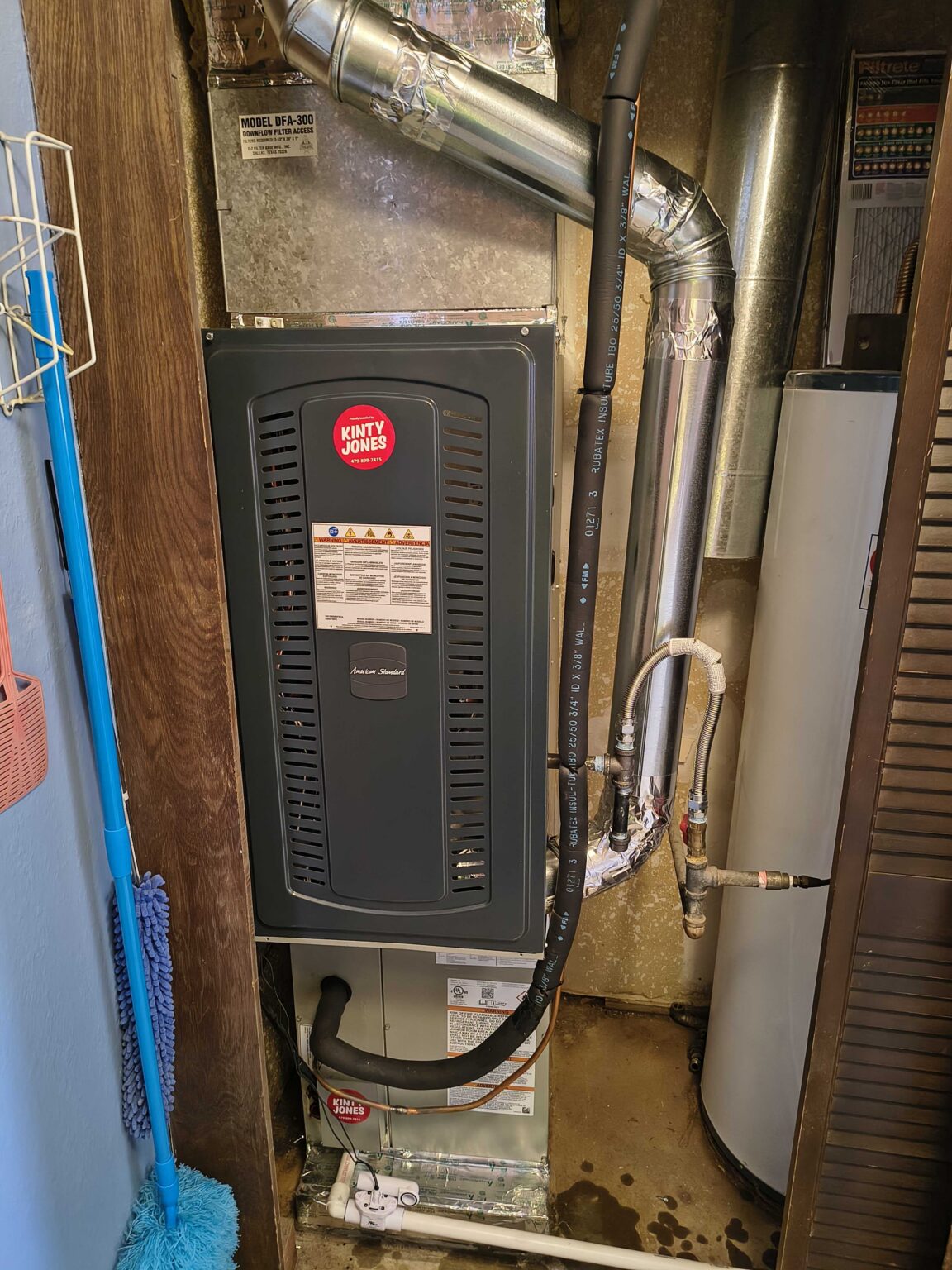
The nameplate on the unit itself usually lists a manufacture date directly, or a serial number that encodes it. A quick look at the unit, plus a search on the brand and serial number if needed, answers the age question in a few minutes without guessing.
- Locate the rating plate or nameplate on the furnace cabinet
- Look for a manufacture date printed directly, often near the model number
- If no date appears, search the brand name and serial number online for a decoder
Most gas furnaces are built to run 15 to 20 years with regular maintenance, so a unit already past that window in a Fayetteville or Rogers home is operating on borrowed time even if it hasn’t shown obvious trouble yet.
Why age changes the math on every repair after this point
A furnace under 10 years old with a failed part is almost always worth fixing. The same failure on a furnace past 15 years carries different math, since parts get harder to source and the unit is already closer to the end of its practical service life regardless of that specific repair.
Once a furnace crosses 15 years, it’s worth treating every subsequent repair call as an opportunity to ask whether that specific fix is truly worth it, or whether the money would be better spent moving the replacement decision forward instead of postponing it again.
What an aging furnace’s efficiency rating actually tells you
Older furnaces were often built to lower AFUE standards than what’s available today, meaning a larger share of every dollar of fuel gets lost as exhaust heat rather than warming the house. That gap alone can justify replacing a furnace even before a single component actually fails.
A technician can check the AFUE rating stamped on the unit and compare it against current standards to show exactly how much ground an older furnace has lost to newer, more efficient models.
Your home isn’t heating the way it used to
A furnace losing its grip on comfort rarely announces itself all at once. More often it shows up gradually: a room that used to feel fine now runs cold, or the system seems to run longer than it once did just to hold the same setting.
Uneven heating and rooms that won’t warm up
If certain rooms in your Fayetteville or Rogers home consistently run cooler than the rest of the house, and that gap has widened over the past year or two rather than staying steady, the furnace itself may be losing capacity rather than the ductwork simply needing a tune-up.
An aging heat exchanger and worn blower components both reduce how effectively a furnace distributes heat evenly through the house, which is why uneven heating tends to worsen gradually rather than appear overnight.
- One or two rooms noticeably colder than the rest of the house
- That imbalance getting worse rather than staying constant year to year
- Adjusting the thermostat higher doesn’t meaningfully close the gap
Rising energy bills without a clear explanation
An aging furnace works harder to produce the same amount of heat, and that extra effort shows up directly on the gas bill long before the unit actually fails, the same gradual decline behind why an AC isn’t cooling the way it used to in summer. A bill that climbs noticeably year over year, with no real change in how the home is being used, points to declining efficiency inside the unit itself.
Pulling last winter’s bills and comparing them against similar months from two or three years back is the clearest way to spot this trend, since a single high bill can just as easily reflect a cold snap as it can a failing furnace.
- Compare bills for the same month across the past two or three winters
- Rule out changes in occupancy, thermostat habits, or added square footage
- Note whether the trend is gradual or whether it jumped sharply after a specific repair
Longer running cycles that never quite catch up
A healthy furnace cycles on, reaches the target temperature, and shuts off in a predictable pattern. A struggling one runs for much longer stretches and still can’t quite close the gap between the thermostat setting and the actual room temperature, especially on the coldest mornings of the season.
This pattern usually means the heat exchanger or the burner assembly is no longer transferring heat as efficiently as it once did, and no amount of thermostat adjustment fixes a problem that’s happening inside the unit itself.
Your furnace is showing safety warning signs
Some warning signs matter more than others, and safety-related ones override every other consideration on this list. A furnace that’s inefficient costs you money. A furnace with a safety issue puts the household at risk, and that distinction should shape how quickly you act.
According to the U.S. Consumer Product Safety Commission, malfunctioning fuel-burning appliances including furnaces contribute to more than 200 accidental carbon monoxide deaths in the United States every year, and the agency specifically identifies aging or poorly maintained heating equipment as a leading cause.
A cracked heat exchanger is never a wait-and-see problem
The heat exchanger separates the combustion process from the air actually circulating through your home. A crack in that component allows combustion byproducts, including carbon monoxide, to mix with the air your family breathes, and it’s one of the few furnace problems that genuinely cannot wait for a convenient time to address.
Rust or visible corrosion on the furnace cabinet, along with cracks at joints or seams, are physical signs worth a technician’s immediate attention rather than a routine maintenance appointment scheduled weeks out.
Unusual smells, sounds, or a yellow burner flame
A furnace burner flame should burn a steady blue. A flame that looks yellow or flickers unevenly can indicate incomplete combustion, which produces more carbon monoxide than a properly functioning burner should. A sudden gas smell, or a loud pop or bang at startup, points to delayed ignition and should get the same urgent attention.
- A yellow, flickering burner flame instead of a steady blue one
- A gas odor, however faint, especially right when the system starts
- Banging, clanking, or booming sounds during startup or shutdown
Why a carbon monoxide detector isn’t optional in a home with a furnace
A functioning carbon monoxide detector is the single cheapest safeguard against the most serious risk an aging furnace presents, and it works whether or not any of the other warning signs on this list have shown up yet. Testing the detector monthly and replacing its batteries on a set schedule keeps that safeguard reliable through the exact months a furnace is working hardest.
Weighing repair against replacement before winter arrives
None of these signs alone always means the furnace needs to go immediately, but a system showing two or three of them at once is telling a fairly clear story. The decision usually comes down to comparing the cost of the next repair against what a full replacement actually costs, factoring in the furnace’s age and how many other symptoms are already present.
The math contractors actually use
A simple way contractors frame this: if a single repair costs more than half of what a new furnace would cost, or if the furnace needs repairs more than once or twice in the same season, replacement is usually the more rational choice financially.
Running that math before a technician even arrives gives you a starting point for the conversation, rather than reacting to whatever number shows up on the invoice.
- A young furnace with one isolated repair almost always favors fixing it
- An older furnace with a major component failure and rising bills usually favors replacing it
- A furnace showing any safety warning sign favors an immediate professional evaluation regardless of age
Getting a straight answer instead of a sales pitch
A technician who explains clearly why repair or replacement makes sense for your specific furnace, rather than defaulting to the same answer for every call, is giving you the kind of information that actually helps you decide with confidence before the coldest part of the season arrives.
Asking for the specific component at issue, and why that component justifies the recommendation, is a fair question in any repair-versus-replace conversation.
Deciding on your own timeline, not the furnace’s
Homeowners who wait for a total breakdown lose the ability to compare quotes calmly or shop for the right equipment. Homeowners who catch the warning signs early get to make the decision on their own schedule instead.
That difference alone is often worth more than whatever a single extra season out of an aging furnace could save.
Conclusion
Warning signs rarely show up all at once, which is exactly why they’re easy to dismiss individually. An aging unit, uneven heating, climbing bills, and any safety-related symptom can each look manageable on their own, but together they tell a clear story about where your furnace actually stands going into winter.
For homeowners in Fayetteville and Rogers, the smartest move isn’t waiting for a complete breakdown during the first hard freeze. It’s recognizing these signs early enough to make a calm, informed decision instead of a rushed one made without heat in the middle of the night.
If your furnace is showing two or more of these signs, KJHC can walk through your specific situation and give you a straight answer on whether repair or replacement makes more sense before winter sets in. Request a service today and get ahead of the cold before it forces the decision for you.